
All the business schools, bestselling books, and motivational speakers tell us what makes great leaders:
1. Show empathy
2. Be a good listeners
3. Embrace change
4. Create a mission or vision
5. Develop your followers
6. Communicate
7. Build trust
8. Articulate clear goals and roles
9. Be open to new ideas
10. Establish accountability
11. Delegate and empower
12. Be consistent
13. Take ownership
14. Inspire others
Followers follow leaders who exhibit these “great leaderhip behaviors.”
I agree.
But then I noticed thought-leaders keep ignoring one obvious question:
Why do people follow assholes?
Autopsy (let’s debunk this)
(excerpts from the research in my book “Winners and Losers”)
On October 5, 2011, Steve Jobs died.

The world mourned the loss of a genius. His iconic impact and the rise of Apple were epic achievements. But after his death, many authors wrote books about Steve.
They said he was an asshole.
WTF?
Apparently, Steve was a little unpleasant to work with. He always shouted down colleagues, dismissed others’ contributions, harassed employees, and humiliated his staff.
When he wasn’t often raging about something, he was impatient, rude, ruthless, and self-absorbed.
Which raises an interesting question.
How does a guy violate “great leadership behaviors” create the most powerful company in the world?
It gets worse.
Steve wasn’t alone. I dug further and found examples of others who were assholes.
In articles such as The Washington Post’s “Do Jerks Make Better Leaders?” Author Geoffrey Nunberg says, “If you just start ticking off names, it sure seems to help. . . . Michael Eisner, Larry Ellison, Martha Stewart, Meg Whitman, Sam Zell, Carly Fiorina, Bob Nardelli, ‘Chainsaw Al’ Dunlap, Richard Fuld, Mark Hurd, Jeffrey Skilling.”
I even found evidence that followers said General Patton, Jeff Bezos, and Mother Teresa were assholes.
OMG, Mother Teresa was an asshole?

More published examples emerged in the research such as:
• Margaret Thatcher: The first female Prime Minister of the United Kingdom, nicknamed "The Iron Lady" from her controversial policies and divisiveness.
• General Douglas MacArthur: Epic successes during World War II and the Korean War for military genius, was also seen as arrogant and insubordinate.
• Leona Helmsley: A real estate tycoon known as the "Queen of Mean," she was notoriously demanding and harsh with her employees.
• Winston Churchill: Celebrated for his steadfast leadership as Britain's Prime Minister during World War II, he was also known to be rude, unfiltered, extremely demanding, and perceived as an "asshole" by his contemporaries.
• Thomas Edison: One of the greatest inventors in history, he was also notorious for ruthless business tactics, taking credit for his employees' ideas, and feuding with Nikola Tesla.
Why stop there? Keep digging into history:
• Alexander the Great: A military genius but with volatile temper and prone to fits of anger.
• Napoleon Bonaparte: A brilliant military leader but also power hungry, ruthless, and authoritarian.
• Genghis Khan: One of the most successful conquerors in history, his methods were often brutal and ruthless, leading to massive loss of life and destruction.
• Attila the Hun: Leader of the Hunnic Empire also known for his brutal and ruthless tactics.
I know you’re thinking, “Could I be an asshole too?”
I don’t know. Maybe. But let’s get back on topic….
So, what’s going on?
Why are people following leaders who are assholes?
The question consumed me. But what surprised me even more?
No one else was asking this question!
Busted (time to demystify it)
Some scholars suggest that “determined" or "passionate" leaders can be perceived as "difficult" or "ruthless” as they push boundaries or challenge the status quo.
But is something deeper causing the “leadership asshole-effect”?
Yes, I think some leaders may be suffering from the EAC syndrome:
Enigmatic Asshole Condition (EAC): A condition detected in leaders who are assholes but in some mysterious and puzzling way combine their unlikable traits with exceptional genius. This evokes curiosity and interest from others to join them in successful movements to change the world. This is a rare condition. Only a few have this. Most assholes are, well, just assholes.
OK, but how do people with EAC get people to follow them?
I found the answer during a Himalayan expedition to study a lost civilization. Visiting remote and ancient cultures helps me discover which leadership instincts are encoded in our biology; and how to use these to increase the strategic performance of modern companies.
People think I’m like Indiana Jones venturing into remote regions in Asia and Africa on these exciting, exotic, and thrilling expeditions.
That’s all bullshit.
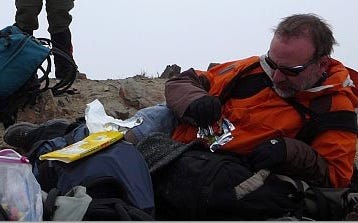
The Indiana Jones experience is more like food poisoning, unidentifiable insect bites, weeks without a bath, near-death experiences, rashes, vomiting, no electricity, no toilet paper (sometimes dawning on you after you poop in a hole you just dug yourself), and wondering whether the water you just drank was sanitized enough (which might magnify the previous experience).
Then of course there’s the exhaustion and altitude sickness. But my favorite is letting parasites hitch a ride back inside me, and then watching my doctor frantically spend months trying to figure out how to kick them out of their new home in my bowels.
None of this is in the fancy travel brochures.
But on this particular expedition, about a dozen of us trekked for weeks over multiple Himalayan passes. I loved seeing such exquisite valleys, entering unusual, historic temples, and befriending curious villagers who flock out to see these “strange” visitors.
But I learned something remarkable at the end . . . from the Americans.
We had a terrific anthropologist leading us, and he did a great job keeping us together, motivated, and moving ahead in spite of the challenges. But at the end of the expedition something strange happened.
We started disintegrating as a team.
Instead of being a cohesive, collaborative group, we began splitting up into cliques and complaining about everything. “Why is my tent over there?” “How come it’s taking so long to get hot water?” “Who does he think he is?” “They’re getting on my nerves!”
Degrading at the end of an expedition is not unusual.
When I wrote High Altitude Leadership with one of the top climbers in the world, Chris Warner, he confirmed that a lot of expeditions fail at the end, not the beginning.
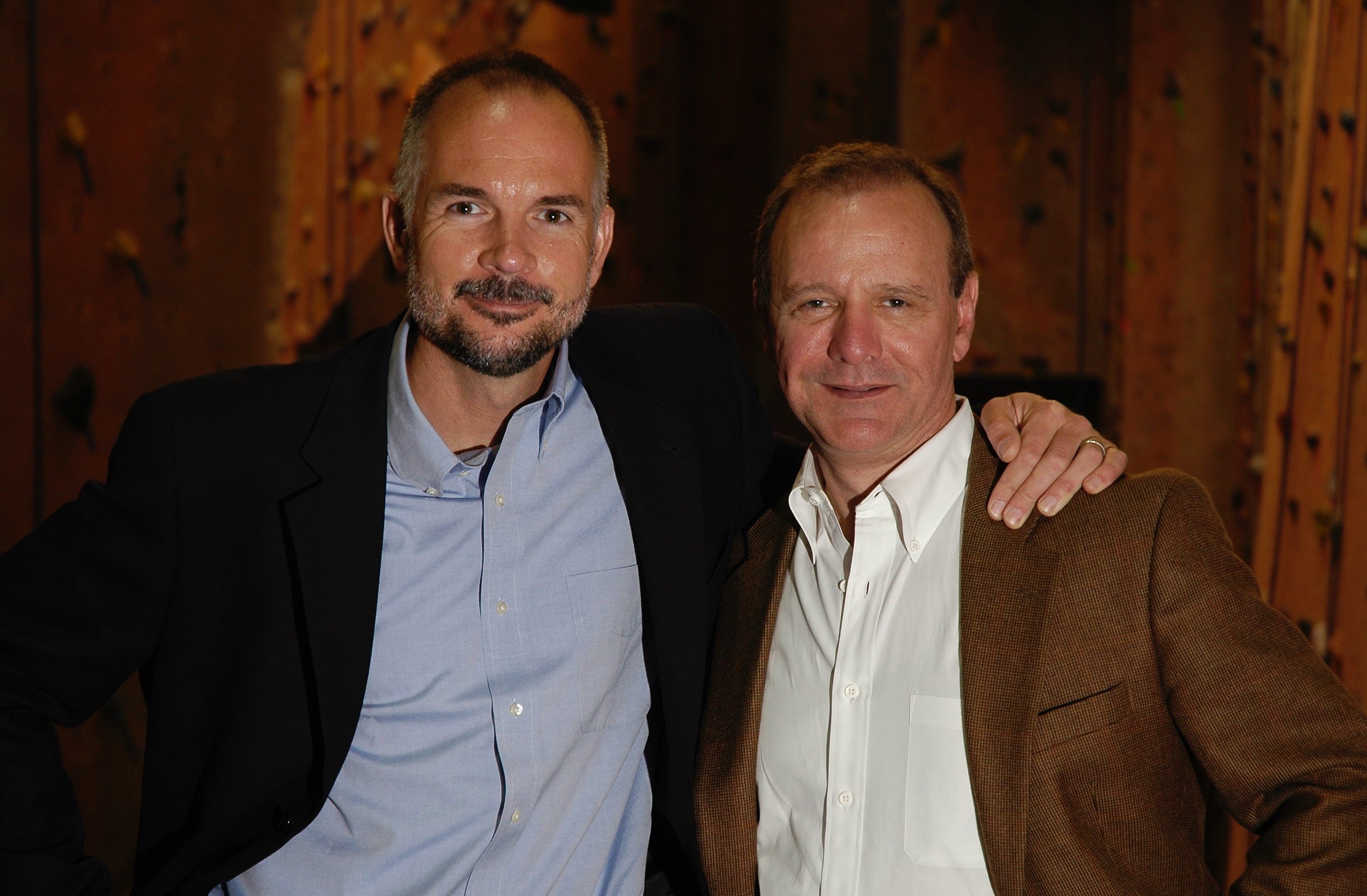
And he should know. If you climb Everest, the bodies of the people you step over or around usually died when they were on the way down, not up.
But what happened to us?
We had a great leader, so why did we stop following him and degrade so fast?
I discovered what was missing.
There was no more story about the future.
Our leader had nothing to inspire us for what’s ahead, warn us of the challenges, prepare us for the discomfort, and make us realize that it would all be worth it.
Instead, it was over.
We were finished.
We didn’t need each other anymore because there was no story to follow.
So how do assholes with EAC lead great companies? Simple:
Followers don’t follow leaders.
They follow the story the leader represents.
How to Apply this
Certainly continue to learn and apply the “great leadership behaviors”, but remember what we learn from the Enigmatic Asshole Condition (EAC) research. People aren’t following you because you’re a nice person with great leader behaviors. They’re following the story you represent.
So what story do you represent? Be clear in yourself:
• Where are you leading them?
• How will they get there?
• Why do they need each other?
• Why is it important?
• What does winning really mean that makes it all worth it?
• What suffering and sacrifice may be necessary to make it all happen?
Somewhere inside that inner-dialogue is why they should follow you. That's where you begin creating your story.
Call to Action
1) Forward this to friends and colleagues.
Let them join you in the revolution against the status quo.
2) Comment on your experience of this topic.
It helps our community a lot.
3) Go further (your competitors are reading this too).
The difference? They’ll keep running initiatives that change nothing. Keep complaining teams “lack urgency.” Keep creating plans that die in execution.
Or they’ll do what 75 executive teams do annually: Bring me in to show why their management theories fail—and what actually works.
Here’s what I don’t do: Workshops on “alignment”, motivational speeches, or ideas that sounds brilliant in the boardroom but die in implementation.
Here’s what happens instead: Your team learns the research from MIT, Johns Hopkins, and decades of fieldwork explaining why initiatives failed. Then we fix it.
“It’s the first event we’ve ever had where people actually implemented something.”
Whether a keynote, retreat, or offsite—the goal is the same:
-
Move the needle.
-
Make it unforgettable.
-
Create an experience where they actually do something differently afterward.
Press kit & inquiries: [email protected]
P.S.: My calendar is 60% booked through year end. Let’s talk. Your funding supports our research.

Responses