— For C-level executives and HR professionals looking to elevate their strategic impact.—
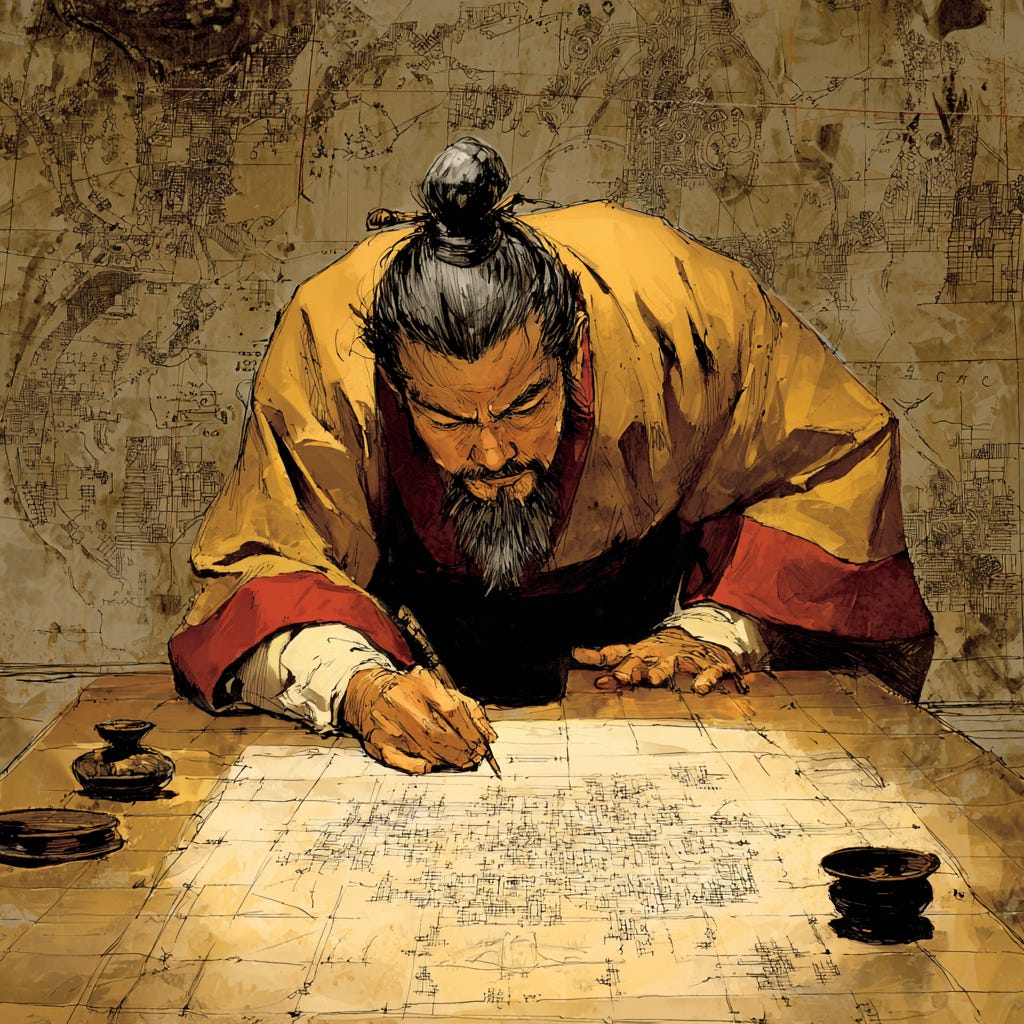
“All men can see the tactics whereby I conquer, but what none can see is the strategy out of which victory is evolved.” — Sun Tzu
Twenty-five years ago I was obsessed with the inconsistencies in how winning occurs in industry. Why was the strategic planning I was doing not always effective?
These thoughts lingered.
Then, after Henry Mintzberg wrote The Rise and Fall of Strategic Planning—and after hearing Tom Peters call the 10 percent success rate of strategic planning “wildly inflated”—I took a hard look at myself.
At the time, I was teaching strategic planning in the graduate business school of Johns Hopkins. But the literature piling up kept staring at me:
-
HBR, 2014 – “The Big Lie of Strategic Planning” (Roger Martin): Most firms mistake forecasting for strategic choice.
-
Forbes, 2014 – “The Death of Strategic Planning.” (Bill Conerly): Global complexity makes prediction futile; real-time adaptability wins.
-
Stanford Social Innovation Review, 2013 – “The Strategic Plan Is Dead.” Dynamic, living strategy replaces static plans.
-
Kotter International, 2020 – “Strategic Planning Is Dead.” Companies still confuse scheduling with thinking.
Questioning your own curriculum is humbling. But it launched a research journey that reshaped how I taught and facilitated executive retreats.
What the autopsies revealed
“The truth shall set you free, but first it will piss you off.” — Gloria Steinem
Every year, companies throw millions at strategic planning.
Every year, 70–90% of those plans fail to execute.
Not from lack of effort or intelligence.
From something deeper?
From training over 20,000 executives in hundreds of industries, one fact kept surfacing:
Were we confusing thinking with planning?

Epiphany
After wandering in the shadows for 25 years, I finally saw it.
-
You need to have a winning strategy before developing a strategic plan to do it.
Somehow I believed the modern management theory I was teaching and collapsed both of these into one tidy process — a single “strategic plan” expected to provide everything we need.
But it didn’t.
I needed to separate again these two historical dimensions if it was ever going to make sense again. I needed to prove it with ancient wisdom and modern biological elements of our species.
So here we go.
Resurrecting how strategy and tactical execution lives
We need strategy and we need execution. In industry we implement the latter as a TACTICAL-Strategy. You know how it goes. We develop it using templates (and I had some of the best templates!) that bring clarity, focus, and accountability by having executives fill-in-the blanks on necessary issues:
-
Mission | Vision | Values
-
Purpose & Why Statements
-
SWOTs
-
Initiatives and Goals
-
Budgets & Financials
-
Resource Priorities
-
KPIs & Scorecards
-
Timelines & Milestones
-
Action Plans & Metrics
-
Followup Implementation Steps

This tool is indispensable. Every company needs a TACTICAL-Strategy. It turns chaos into order, and creates coordination out of confusion.
But autopsies on dead companies clutching their templates revealed it’s not the whole game. It’s necessary but something else was missing.
This explained why companies still get blindsided or out-maneuvered.
So What’s Missing?
We’ve been playing with only one instrument in the orchestra.
-
The TACTICAL-Strategy keeps the rhythm of execution.
-
But we’ve been missing the other type of strategy—the score that defines the melody of winning.
This other strategy draws from ancient wisdom and modern evolutionary science, not spreadsheets.
It sparks the epiphanies that logic alone can’t reach.
I call it the META-Strategy ™.
More about this coming in my next post.
Until then,
— Don
© 2025 Don Schmincke. All rights reserved.
Call to Action
1) Forward this to friends and colleagues.
Let them join you in the revolution against the status quo.
2) Comment on your experience of this topic.
It helps our community a lot.
3) Go further (your competitors are reading this too).
The difference? They’ll keep running initiatives that change nothing. Keep complaining teams “lack urgency.” Keep creating plans that die in execution.
Or they’ll do what 75 executive teams do annually: Bring me in to show why their management theories fail—and what actually works.
Here’s what I don’t do: Workshops on “alignment”, motivational speeches, or ideas that sounds brilliant in the boardroom but die in implementation.
Here’s what happens instead: Your team learns the research from MIT, Johns Hopkins, and decades of fieldwork explaining why initiatives failed. Then we fix it.
“It’s the first event we’ve ever had where people actually implemented something.”
Whether a keynote, retreat, or offsite—the goal is the same:
-
Move the needle.
-
Make it unforgettable.
-
Create an experience where they actually do something differently afterward.
Press kit & inquiries: [email protected]
P.S.: My calendar is 60% booked through year end. Let’s talk. Your funding supports our research.

Responses