
The Belief Pattern Strategy
Many military victories, business disruptions, and competitive upsets share a hidden thread: someone shaped what the other side believed—then exploited it ruthlessly.
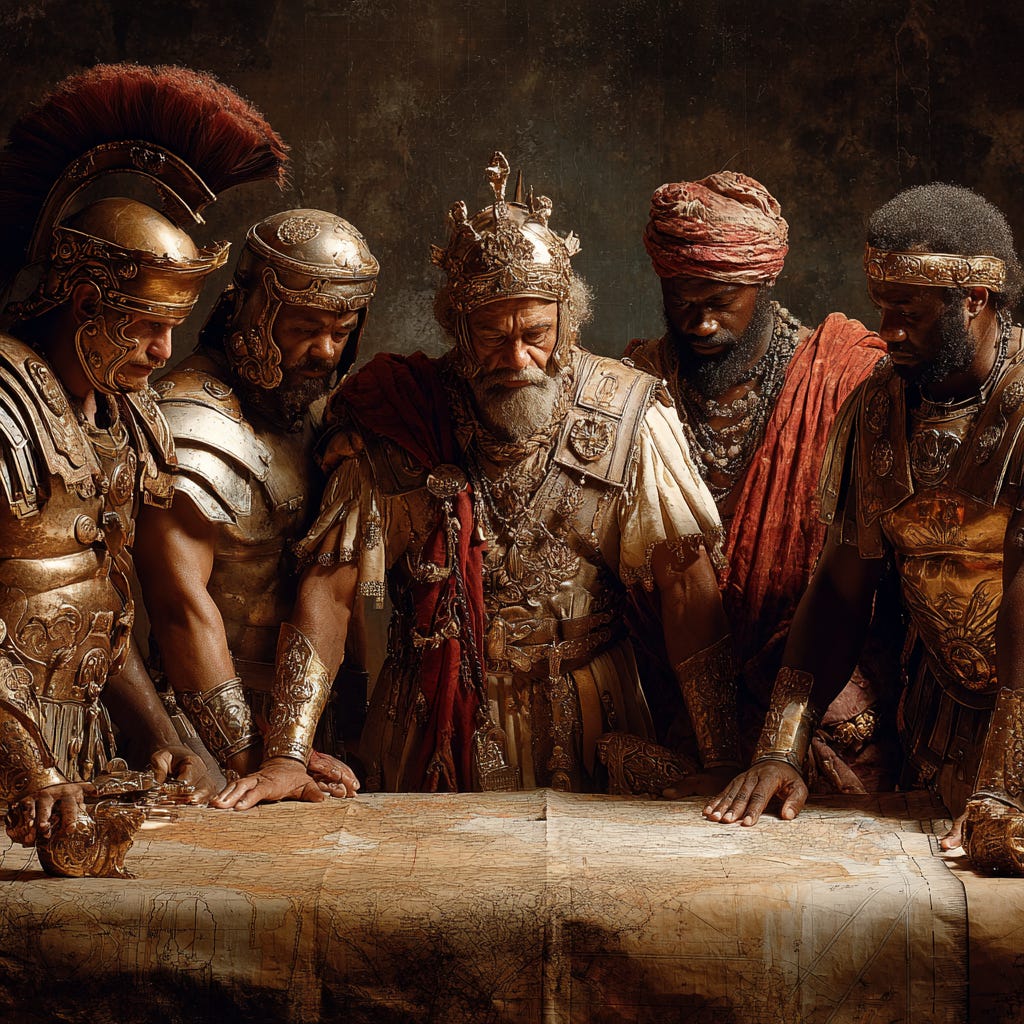
Here we introduce the META-Strategy component of belief management: understanding that your competitor’s decisions flow from their assumptions about you, and those assumptions can be weaponized.
Consider what “beliefs” actually encompass:
-
Reputation = what they believe about your capabilities
-
Values = what they believe is important to you
-
Perception = what they believe is happening
-
Threat assessment = what they believe you’re hiding
-
Credibility transfer = what they believe applies across domains
When you extend the definition this way, an ancient siege tactic, a modern environmental campaign, and a tech company’s cloud strategy all reveal the same architecture: shape their beliefs, then use those beliefs to outmaneuver them.
But, if this system has been around for thousands of years, why have we been ignoring it?
-
Have we become too arrogant thinking we know better?
-
Or that maybe our tools are more advanced?
-
Or that AI will save us?
The ancients would say we’re, well, confused. See the research posts on META-Strategy development here:
donschmincke.substack.com/s/meta-strategy
Forget the boardroom. These battlefield brawlers didn’t sit around doing SWOT analysis or rewriting their mission statements—they rewrote the damn battlefield. Let’s unpack how a few overachievers shattered expectations and crushed empires using brain over brawn.
Historical Foundation #1: Battle of Pelusium (525 BC)
Exploiting sacred beliefs.
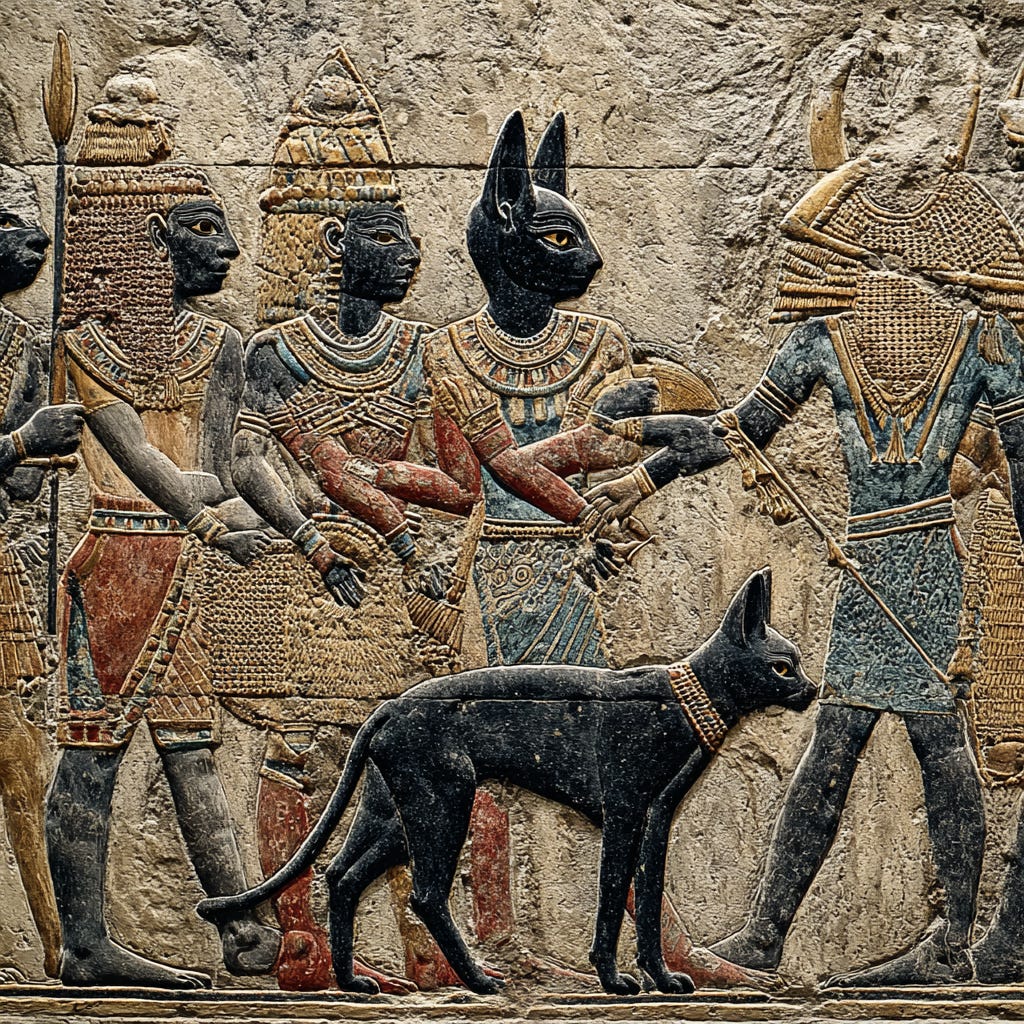
When Persian King Cambyses II prepared to invade Egypt in 525 BCE, he faced a a BIG problem: the fortress of Pelusium guarded Egypt’s eastern gateway with strong defenses and determined soldiers. Egyptian walls were thick, and their soldiers were motivated by religious fervor.
According to the 2nd-century writer Polyaenus, Cambyses discovered something more powerful than siege engines: the Egyptians’ sacred beliefs about animals, particularly cats. The Egyptians considered killing a cat—even accidentally—to be punishable by death.
The Strategy:
Polyaenus describes the tactic: “To counter this destructive barrage, Cambyses ranged before his front line dogs, sheep, cats, ibises, and whatever other animals the Egyptians hold sacred. The Egyptians immediately stopped their operations, out of fear of hurting the animals, which they hold in great veneration.”[^1]
So Cambyses weaponized the SPCA; like a biblical petting zoo of doom. The Egyptians faced an impossible choice: defend their city and risk killing sacred animals (which carried severe religious and legal consequences according to sources like Herodotus)[^2], or surrender to preserve their beliefs.
They surrendered.
Pelusium fell, and Egypt became a Persian province.
Why This Worked:
Cambyses understood that Egyptian law and religion created a belief system where harming certain animals—especially cats, which were associated with the goddess Bastet—was punishable by death. He didn’t need to defeat Egyptian military capability; he weaponized their own value system against them.
The Principle:
When you understand what your opponent believes is sacred or inviolable, you can create situations where defending against you requires them to violate their core beliefs. Most won’t do it.
Historical Foundation #2: Zhuge Liang’s Empty Fort Strategy
Reputation as a Weapon
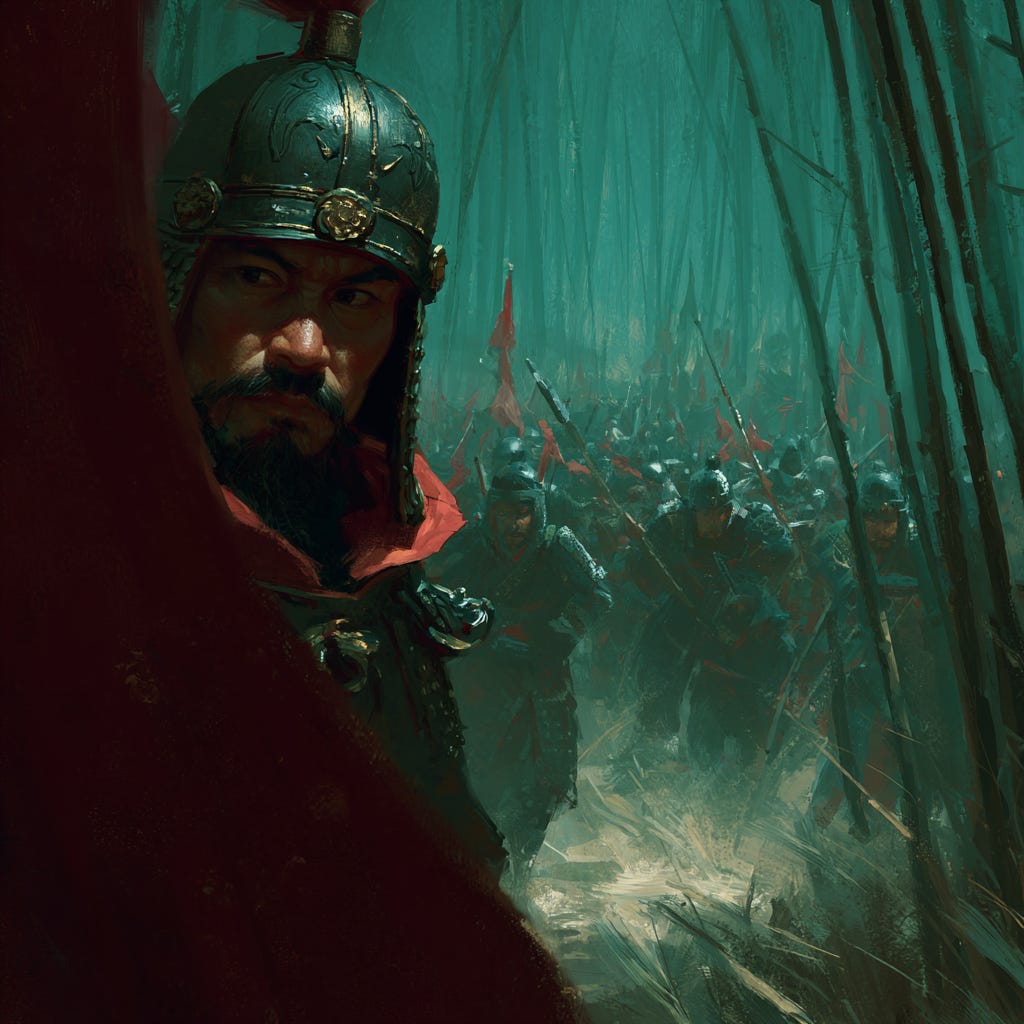
During China’s Three Kingdoms period (220-280 CE), strategist Zhuge Liang faced certain defeat when enemy general Sima Yi approached with a massive army while Zhuge Liang had almost no troops.
The Situation:
Zhuge Liang was trapped in a city with fewer than 100 soldiers against Sima Yi’s force of 150,000. Conventional defense was impossible. He was outnumbered, cornered, and had every reason to prepare for death.
The Strategy:
Instead of fleeing or fighting, he shockingly pulled the ancient Chinese version of the Jedi mind trick:
-
Opened all the city gates wide
-
Ordered soldiers to disguise themselves as civilians sweeping the streets like it was casual Friday
-
Sat atop the city wall playing his guqin (a stringed instrument) with two servants beside him, calmly playing music like he was hosting an open mic night as the enemy approached
The Result:
Sima Yi rode up with a massive army and saw... nothing suspicious, just Zhuge vibing with his instrument. And that’s exactly what made Sima Yi lose his shit. He knew Zhuge was a devious mastermind with a reputation for brilliant tactical traps that previously ambushed armies. So he assumed this was an elaborate ploy with hidden troops ready to pounce.
“Zhuge Liang is always cautious and never takes risks,” Sima Yi reportedly said. “The gates are open and he sits there playing music—this must be a trap.”
He ordered his entire army to retreat.
No arrows. No blood. Just strategic stagecraft and a killer reputation.
Why This Worked:
Zhuge Liang’s previous victories had created a belief—a reputation—in Sima Yi’s mind that “Zhuge Liang never acts without overwhelming advantage.” When confronted with behavior that seemed to contradict this (sitting exposed), Sima Yi’s belief system forced him to reinterpret the evidence to fit his existing assumptions.
The Principle:
Your reputation becomes a weapon when your opponent trusts their beliefs about you more than the evidence in front of them. Their certainty about who you are blinds them to what you’re actually doing.
Historical note: Historians debate whether these events above happened exactly as described or became embellished over time. However, even if legendary, these stories reveal strategic principles that commanders and leaders found worth preserving—and they demonstrate belief management concepts that work in documented modern cases.
META-Strategy Lesson: If your enemy’s operating system is “belief-based,” turn their sacred cows (or cats) into tactical weapons. Use your enemy’s values—or your customer’s virtues—as the battlefield.
Modern Matches:
Who has used this META-Strategy approach today?
Patagonia’s “Don’t Buy This Jacket” Campaign
Values as Competitive Advantage
On Black Friday 2011, while every retailer screamed “BUY MORE,” Patagonia published a full-page ad in The New York Times with a shocking message: “Don’t Buy This Jacket.”
The Strategy:
The ad featured Patagonia’s popular R2 fleece jacket and detailed its environmental cost:
-
135 liters of water used (enough for 45 people’s daily drinking needs)
-
20 pounds of CO₂ emissions
-
Two-thirds of its weight in waste produced
Patagonia asked customers to consider whether they truly needed the jacket before buying.[^3]
The “Contradiction”:
This appeared commercially suicidal—telling customers NOT to buy your product on the biggest shopping day of the year.
The Result:
In the nine months following the campaign, Patagonia’s sales increased approximately 30%, with revenue growing from $400 million (2011) to $543 million (2012).[^4] By 2017, Patagonia reached $1 billion in annual sales.
Why This Worked:
Patagonia understood that their customers believed environmental responsibility matters—but suspected most companies of greenwashing. By demonstrating they’d sacrifice short-term sales to live their values (making their environmental costs transparent), Patagonia built a belief: “This company actually means it.”
That belief created fierce loyalty. Customers didn’t stop buying—they bought MORE, because they trusted they were supporting a company aligned with their values.
The Principle:
When your industry is saturated with competitors making similar value claims, demonstrating you’ll sacrifice profit to uphold those values creates a belief differential that competitors can’t match with marketing alone.
Apple’s Product Launch Secrecy
Mystique as Market Control
Apple’s obsessive product secrecy isn’t just about preventing leaks—it’s about managing what the market believes is coming.
The Strategy:
-
Leak nothing official until the carefully staged reveal
-
Let speculation build for months before announcement
-
Create a ritual (the keynote) where beliefs are confirmed or shattered
-
Make the revelation feel like a privilege
The Result:
Apple doesn’t just launch products—they manage belief cycles:
-
Speculation phase: Market forms beliefs about what might come
-
Anticipation phase: Managed leaks shape which beliefs gain traction
-
Revelation phase: Apple controls the moment when belief becomes reality
-
Validation phase: Early adopters signal which beliefs were correct
Why This Works:
The mystique creates a belief: “Apple knows something transformative we don’t.” This belief keeps media attention, developer interest, and customer anticipation focused on Apple rather than competitors—even when competitors might have objectively superior specifications.
The Principle:
When you control the information flow, you control the belief formation process. Your competitors are fighting against what the market believes about you, not just what you actually deliver.
How Amazon Built AWS Credibility
Credibility Transfer Through Staged Belief Building
When Amazon launched Amazon Web Services in 2006, they faced a credibility problem in enterprise IT. Amazon was known for e-commerce, not enterprise infrastructure. They had to BUILD beliefs about cloud reliability from scratch.
The Real Strategy (Three Phases):
Phase 1 (2006-2009): Build Belief with Startups
AWS launched with Amazon S3 (Simple Storage Service) in March 2006, followed by EC2 (Elastic Compute Cloud) in August 2006.[^5] The earliest customers were startups and small companies who couldn’t afford to buy their own hardware infrastructure.
Early AWS adopters included companies like Dropbox (founded 2007), Airbnb (founded 2008), and Netflix.[^6] These startups weren’t betting on Amazon’s brand—they were betting on economics. As one early customer recalled, “You no longer needed to find tens of thousands of dollars to invest in hardware when you weren’t even sure if something was going to work.”[^7]
Why startups? They had no legacy infrastructure to migrate and were attracted by pay-as-you-go pricing that eliminated massive upfront capital expenditures.
Phase 2 (2009-2012): Demonstrate Reliability
AWS proved itself through uptime, security, and performance over several years. Startups publicly credited AWS for enabling their rapid scale. Amazon invested heavily in compliance certifications and security features to meet enterprise requirements.
Phase 3 (2012+): Transfer Belief to Enterprises
NOW the credibility transfers: “If these successful startups run on AWS...”
The CIA contract in 2013 signaled government-level security.[^8] When the CIA awarded AWS a $600 million cloud computing contract after a competitive bidding process, it sent a powerful message to enterprise IT departments: if the intelligence community trusted AWS with classified data, perhaps cloud infrastructure had matured beyond the “startup toy” perception.
By 2015, enterprise adoption accelerated significantly.
The META-Strategy Insight:
Amazon didn’t transfer existing beliefs from e-commerce to cloud computing. They BUILT NEW beliefs about cloud reliability with an audience (startups) who prioritized cost and innovation over established reputation, then leveraged THOSE beliefs to win enterprises.
This is belief management in stages:
-
Identify low-trust-requirement audience (startups with limited capital)
-
Build track record and proof points through their success
-
Transfer newly-built beliefs to high-trust-requirement audience (enterprises)
Lesson: Sometimes you can’t transfer existing reputation. You have to build new beliefs with one audience, then leverage those beliefs to win another.
CLOSING META-INSIGHT:
Whether it was serenading the enemy or decorating shields with cats, stories about these ancient strategies reveal a clue on how to win: don’t fight the fight they expect.
The surest victories often come not from overpowering the opponent’s force, but from shaping what the opponent thinks is happening.
Victory can come from manipulating perception, beliefs, and assumptions—not just swords and troops. That’s the ancient echo of META-strategy:
The strongest play isn’t more power. It’s changing what power even means.
Call to Action
1) Forward this to friends and colleagues.
Let them join you in the revolution against the status quo.
2) Comment on your experience of this topic.
It helps our community a lot.
3) Go further (your competitors are reading this too).
The difference? They’ll keep running initiatives that change nothing. Keep complaining teams “lack urgency.” Keep creating plans that die in execution.
Or they’ll do what 75 executive teams do annually: Bring me in to show why their management theories fail—and what actually works.
Here’s what I don’t do: Workshops on “alignment”, motivational speeches, or ideas that sounds brilliant in the boardroom but die in implementation.
Here’s what happens instead: Your team learns the research from MIT, Johns Hopkins, and decades of fieldwork explaining why initiatives failed. Then we fix it.
“It’s the first event we’ve ever had where people actually implemented something.”
Whether a keynote, retreat, or offsite—the goal is the same:
-
Move the needle.
-
Make it unforgettable.
-
Create an experience where they actually do something differently afterward.
Press kit & inquiries: [email protected]
P.S.: My calendar is 60% booked through year end. Let’s talk. Your funding supports our research.

Responses