
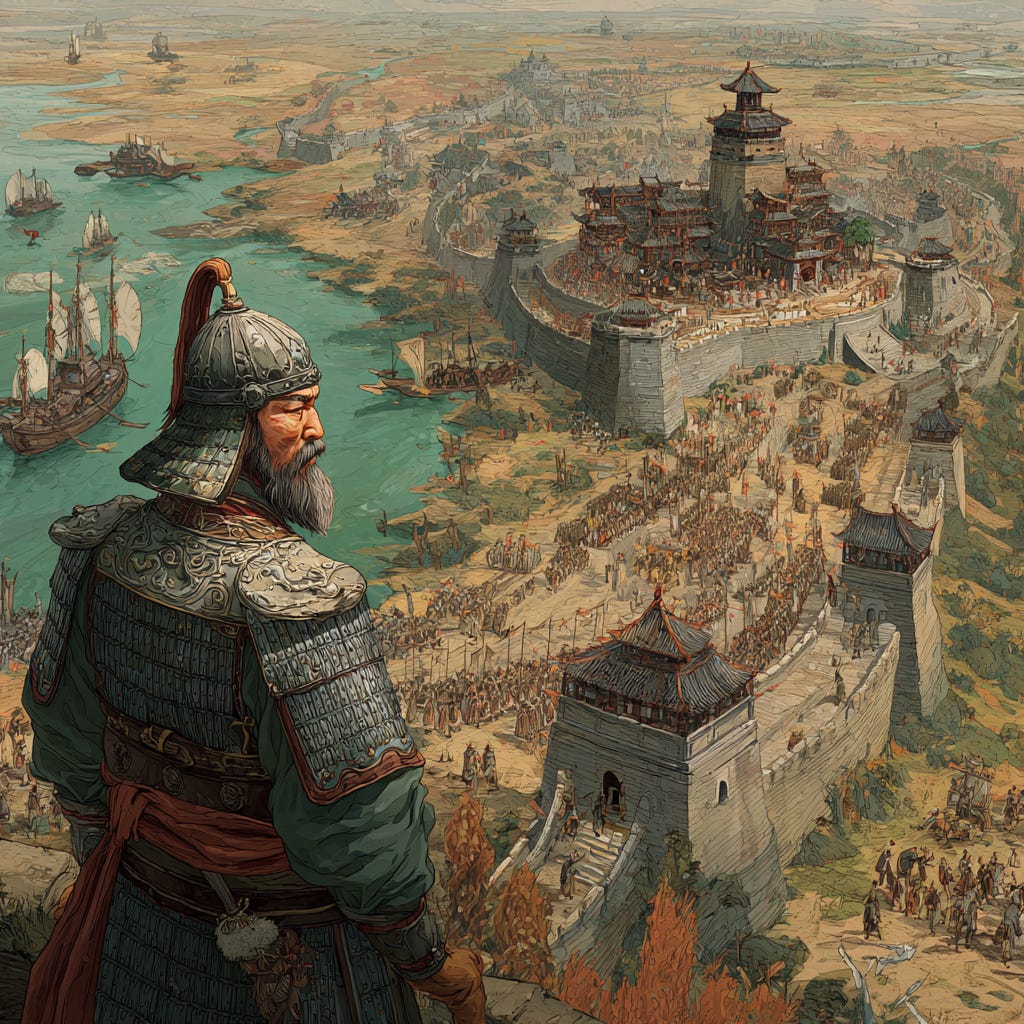
In this next dispatch, we continue exposing why traditional strategic planning—while necessary—isn’t enough to win. META-Strategy must come first.
Why?
Because it shifts the entire gameboard before the first move is made.
Catch up on the series so far —— https://donschmincke.substack.com/s/meta-strategy
Your competitor just launched a superior offering. They have more capital, better development, stronger distribution.
What do you do?
Most CEOs double down on the same battlefield—fight harder, cut deeper, react.
This is how companies die.
The executives who win don’t fight better. They change what “fighting” even means.
Caesar did it in 52 BC with campfires and a bridge. Netflix did it in 2007 with a mail-order DVD service. And right now, someone in your industry is doing it to you—shifting the battlefield while you’re still arguing about tactics.
In this next post of the META-Strategy series we’ll explore more examples of how out-intuiting, not out-analyzing, enables you to out-maneuver.
Catch up on the series so far: META-Strategy Archive
Here’s how it works, why it works, and what you’re missing. his time we look at changing the battlefield.
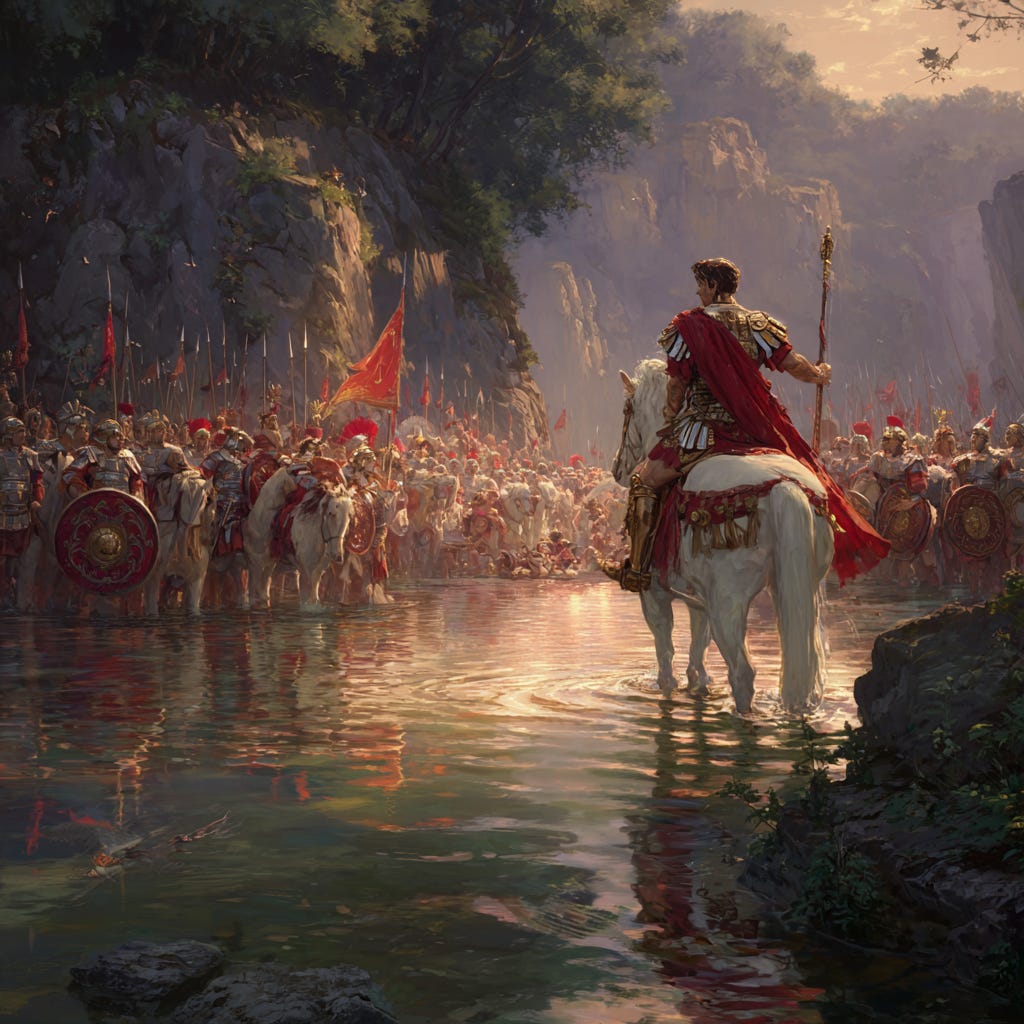
Caesar Crossing the Allier River (52 BC)
Shift the stage, not the script.
Caesar had a Gallic problem - named Vercingetorix. He rudely kept burning bridges to box the Romans in. So Caesar created a level of misdirection David Copperfield would envy. He split his forces - one legion in camp, the other to a more strategic position.
But how does he convince Mr. V (Vercingetorix) that he didn’t move?
Ceasar made sure all his standards (flags) remained visible throughout the night. And, to make it more evident, he made sure extra campfires were burning to make it look like his whole army was still there.
Meanwhile, he secretly marched the rest of his troops through dense forest to a spot miles upriver where a bridge had been partially destroyed by Mr. V.
Thanks to the advantage of great engineers, the bridge was rebuilt in a single day—Roman efficiency at its finest!
The entire Roman army crossed before Vercingetorix even realized he’d been punked. Caesar shifted the battlefield to behind the Gauls, forcing Vercingetorix into a hasty retreat.
Added detail: This happened near modern-day Moulins, France. Caesar describes this maneuver in his own Commentaries on the Gallic War (Book VII), because the man loved documenting his own brilliance.
Look, Caesar figured this out 2,000 years ago: the dumbest thing you can do is fight your enemy where they expect you.
While Vercingetorix was watching campfires, Caesar was already behind him, probably laughing.
Modern CEOs do the exact same thing—just with worse metaphors and PowerPoint. They let competitors define the battlefield (pricing wars, feature comparisons, market share pissing contests), then wonder why they’re losing.
Stop fighting their fight. Build a new arena where their advantages become liabilities.
Modern examples:
-
Airbnb vs. Hotels
Hotels prepared for online travel agencies and room competition. They weren’t prepared for people renting apartments to strangers. Airbnb’s “not-really-a-hotel” model left regulators and hoteliers punching air while it quietly invaded the space behind their backs. -
Uber vs. Taxis
The taxi industry secured the licensing and regulatory battlefield. They didn’t see frustrated customers forming around the corner. The cultural belief that licensed taxis were “legitimate transportation” got reframed as “ridesharing among peers.” Taxi services tried regulating Uber out, until citizens marched on city hall. The war was over before they knew the enemy had circled behind them.
Scipio Africanus at Zama (202 BC)
Change the arena. Then break their weapons.
Scipio Africanus was done playing defense. Instead of chasing Hannibal around Italy for another decade, he took a page from Hannibal’s own playbook and invaded North Africa—Carthage’s home turf.
This forced Hannibal to return from Italy to defend his homeland.
At Zama (202 BC), Hannibal rolled out his secret weapon: 80 war elephants, the ancient equivalent of tanks. These things could trample infantry and cause mass panic.
But Scipio, who’d studied Hannibal obsessively, had a plan.
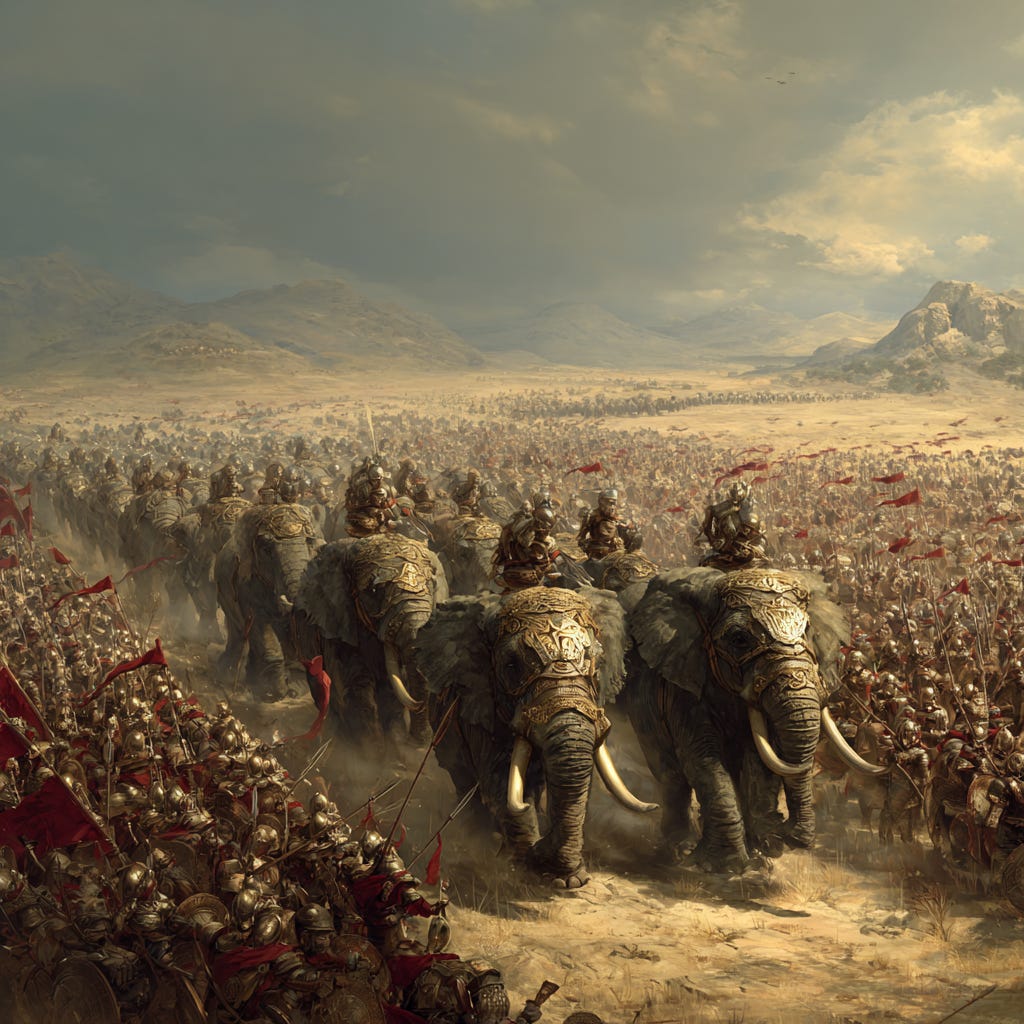
Instead of a solid formation, Scipio arranged his troops in columns with deliberate gaps between them. When the elephants charged, Roman trumpets, horns, and shouting created a wall of noise that startled and confused the animals. Then, Roman velites (light infantry) threw javelins and opened the lanes wider.
Many elephants simply ran down the empty corridors between Roman units. Others, wounded and panicked, turned and stampeded back through Carthaginian lines, trampling their own troops.
Hannibal’s ultimate weapon had become his liability.
Then Scipio’s cavalry (allied Numidian horsemen who’d switched sides) swept around and attacked the Carthaginian rear—the same tactic Hannibal had used at Cannae now turned against him.
Hannibal lost. Carthage surrendered. Scipio earned his honorific “Africanus,” and Rome became the Mediterranean’s sole superpower.
Added detail: This battle ended the Second Punic War. It was the only time Hannibal was definitively defeated in a pitched battle. Scipio studied his enemy so thoroughly that he beat Hannibal using Hannibal’s own principles.
You don’t win by following the rules. You win by learning what makes rules work, then rewriting them.
Scipio didn’t get better elephants. He made elephants irrelevant.
Most executives suffer from Charlatitis ***** on this topic—they’ve skimmed Sun Tzu quotes on LinkedIn and think they understand strategy. Real META-strategists study Scipio, not corporate consultants.
The pattern: Stop fighting in their arena. Build a new one where their core strengths become catastrophic weaknesses.
Modern Match: Netflix vs. Blockbuster
Netflix’s Reed Hastings knew he couldn’t win in the store rental model. So he shifted the battlefield entirely—first to mail delivery, then to streaming. Blockbuster had all the stores. Netflix made stores irrelevant.
More examples:
-
Amazon: Everyone built “stores”; Bezos built infrastructure. Retail rivals woke up in a logistics-software war they weren’t trained for.
-
Microsoft (Nadella): Moved the center of gravity from OS turf wars to cloud ecosystems, where partnership and developer love matter more than desktop dominance.
Battle of Stirling Bridge (1297 AD)
You Choose The Field.
William Wallace faced a problem: the English army outnumbered his Scottish forces significantly and had heavy cavalry—medieval tanks.
Direct confrontation = suicide.
So what does Wallace do?
He shifted the battle to terrain that favored him: a narrow wooden bridge over the River Forth at Stirling.
The bridge was so narrow that only two or three horsemen could cross at a time. Wallace let the English start crossing, waiting patiently as hundreds of enemy knights and infantry funneled across this chokepoint.
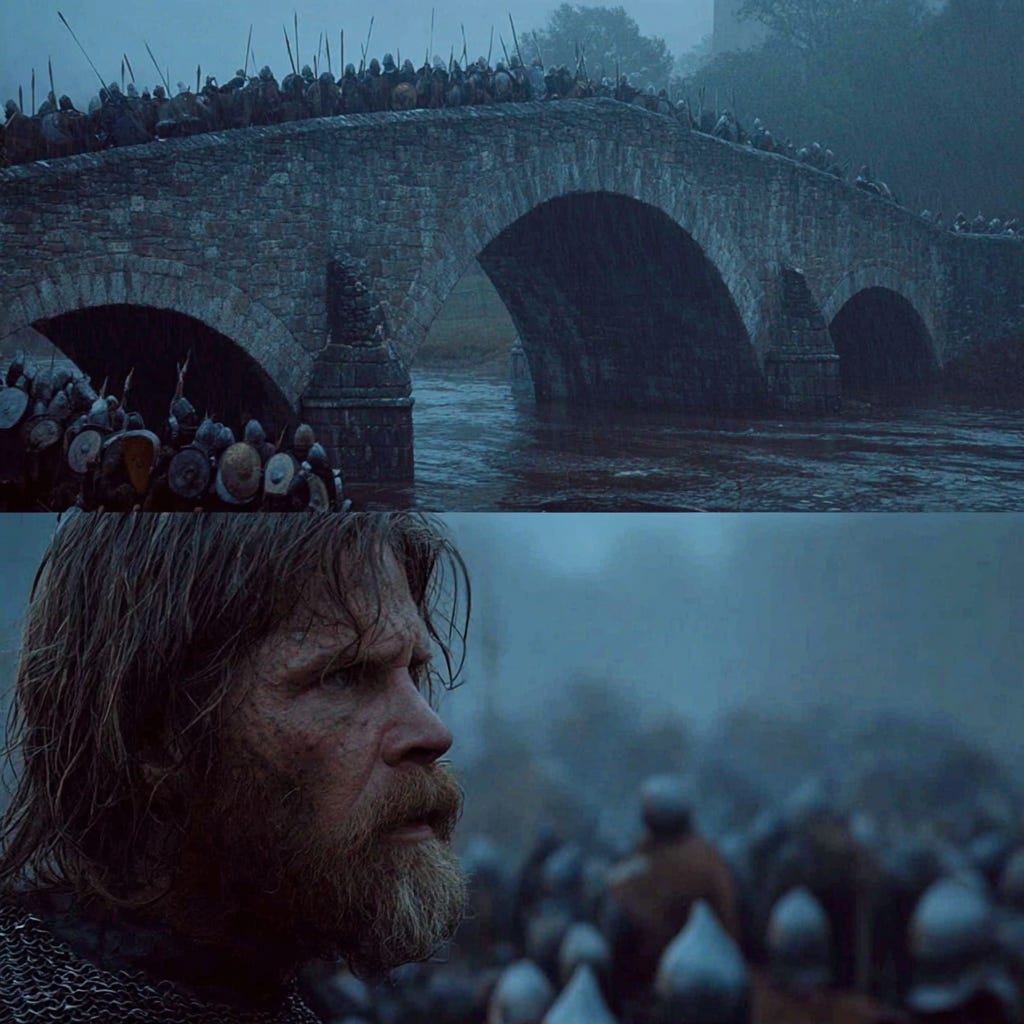
When about half the English army had crossed—enough to be dangerous but not enough to be overwhelming—Wallace’s spearmen charged.
Brilliant!
The English on the Scottish side were trapped against the river, unable to maneuver or use their cavalry effectively. Those still crossing blocked the retreat of those already across. The bridge itself jammed like the 405 in LA! Panicking soldiers and horses blocked any rapid crossing.
The English commander, John de Warenne, watched from the other side as his army was butchered.
At least 5,000 English soldiers died, including the treasurer Hugh de Cressingham. The Scots allegedly flayed him and made souvenirs from his skin. Brutal? Yes. Effective deterrent for the next guy eyeing Scotland’s taxes? Absolutely.
Scotland won that day not with numbers—but with the perfect bottleneck.
Added detail: This victory inspired the rebellion that became Scotland’s war for independence. The bridge today is a major tourist site, and Wallace became a legend (though Mel Gibson’s later portrayal took... creative liberties).
You don’t need to outmuscle when you can outmaneuver.
Wallace couldn’t beat the English in an open field. So he didn’t try. He created a chokepoint, let arrogance drive the enemy right into it, then closed the trap.
Modern Matches:
-
Visa/Mastercard - Created the payment network chokepoint that all transactions must flow through.
-
Apple App Store - Made themselves the mandatory bottleneck for iOS software distribution.
CLOSING META-INSIGHT:
When you control the battlefield, you don’t need better weapons—you just need better positioning.
That’s the power of META-Strategy.
Whether it’s Caesar’s campfire sleight-of-hand, Scipio turning Hannibal’s strengths against him, or Netflix quietly shifting from stores to streams, the lesson is clear:
Strategy isn’t just about better moves—it’s about changing the board.
Next time you face a seemingly dominant competitor, ask yourself: “Am I still fighting their fight?” Because the smartest move might be stepping off the map and drawing a new one.
What if you did not overpower your opponent’s force, but shifted the opponents battlefield? Victory comes from manipulating perception, beliefs, and assumptions—not just swords and troops.
That’s the ancient echo of META-strategy:
The strongest play isn’t more power.
It’s changing what power even means.
Call to Action
1) Forward this to friends and colleagues.
Let them join you in the revolution against the status quo.
2) Comment on your experience of this topic.
It helps our community a lot.
3) Go further (your competitors are reading this too).
The difference? They’ll keep running initiatives that change nothing. Keep complaining teams “lack urgency.” Keep creating plans that die in execution.
Or they’ll do what 75 executive teams do annually: Bring me in to show why their management theories fail—and what actually works.
Here’s what I don’t do: Workshops on “alignment”, motivational speeches, or ideas that sounds brilliant in the boardroom but die in implementation.
Here’s what happens instead: Your team learns the research from MIT, Johns Hopkins, and decades of fieldwork explaining why initiatives failed. Then we fix it.
“It’s the first event we’ve ever had where people actually implemented something.”
Whether a keynote, retreat, or offsite—the goal is the same:
-
Move the needle.
-
Make it unforgettable.
-
Create an experience where they actually do something differently afterward.
Press kit & inquiries: [email protected]
P.S.: My calendar is 60% booked through year end. Let’s talk. Your funding supports our research.

Responses