
The offsite produced consensus.
Monday produced nothing.
Everyone survived two days at the hotel.
I know. I’ve reviewed hundreds of strategic events. The executive team debates priorities. Finance supplies charts. Marketing presents trends. Someone moves 47 sticky notes across a wall.
Eventually, everybody agrees on five "strategic priorities."
Grow revenue.
Improve margins.
Develop talent.
Increase customer intimacy.
Accelerate AI.
Excellent.
But this isn’t a strategy.
It’s just an operating plan with a strategic planning cover.
While on the faculty at Johns Hopkins researching why strategic planning fails, I discovered something uncomfortable. Like everyone else, I was giving too much credit to the planning process and not enough to the thinking that has to precede it.
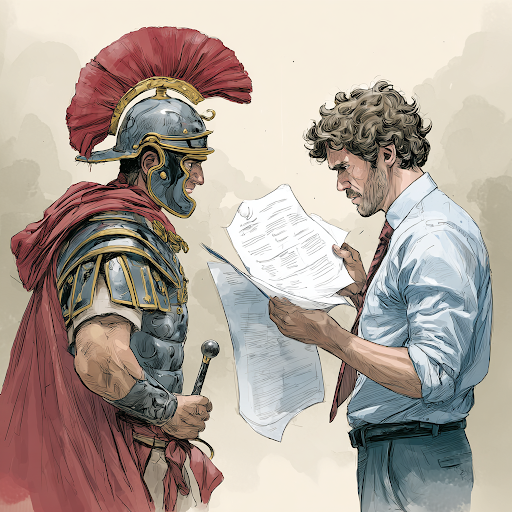
This was not a new idea. It had been used for 1,000’s of years by our ancestors.
We mistakenly call something "strategic" because we have a meeting, fill in the blanks on a template, and create a PowerPoint.
Even I was teaching it wrong . . . and I had some great templates!
But filling in the blanks of a template
doesn't make strategy.
But I eventually forgave myself. Teaching template-driven strategy was not wrong . . . it was just incomplete.
Strategy starts when leaders drive competitive advantage by challenging reality. What changed while we were busy defending what made yesterday’s success possible? Are we really observing today’s reality or, worse, denying it? Do our customers agree with our perception of value?
I was failing to teach that. Students were not leaving with methods to challenge beliefs, shift reality, and use intuition to out-maneuver the enemy.
This drove my new research. And that created a distinction between MEGA-Strategy and TACTICAL-Strategy
- MEGA-Strategy—Asks two brutal questions winners have asked for thousands of years: What does winning mean? And how do we quickly outmaneuver to achieve it ?
- TACTICAL-Strategy—Describes traditional strategic planning: the initiatives, projects, budgets, templates, tools, and actions used to execute.
Most planning processes skip the first and become remarkably efficient at the second.
That's why the annual strategic plan often becomes a negotiated collection of departmental ambitions.
- Sales wants growth.
- Operations wants efficiency.
- HR wants talent.
- IT wants transformation.
- Finance wants margin.
Nobody wants their priorities removed, so everyone's priorities survive.
Congratulations. You have achieved consensus.
Consensus is often what happens when strategy refuses to make enemies.
Why Monday Kills the Offsite
Real strategy creates loss. What do we stop doing?
Choosing one market means starving another. Building one capability means deprioritizing another. Changing the business model threatens someone's expertise, budget, status, or career.
That makes actual strategy biologically and politically uncomfortable. So organizations retreat toward something safer – Planning.
Planning feels strategic without requiring sacrifices.
Planning gives everyone something.
Everyone gets initiatives. Everyone keeps territory. Everyone leaves with deliverables.
Then Monday arrives.
- The old incentives are still there.
- The old budgets are still there.
- The silos are still there.
- And overloaded, stressed employees are still there.
Nothing fundamental changes because nothing fundamental was surrendered.
That's not an execution problem . . . execution failure was designed into the plan!
Blockbuster had plans.
Kodak had plans.
Department stores watching Amazon had plans.
Their problem was not a shortage of initiatives.
They were executing yesterday’s assumptions with increasing professionalism.
That’s the danger.
Organizations can become very good at executing a future that no longer exists.
What to Do Monday Morning
Take your current strategic plan into the executive meeting and perform three tests.
- Delete the tactics.
Remove projects, KPIs, hiring plans, technology implementations, templates, and departmental initiatives.
Then ask the room what winning means. If they can't answer in one sentence, you've found the problem.
You don't have a strategy. You have a task list with executive sponsorship.
- Find the sacrifice.
Ask each executive: "Because of this strategy, what will we deliberately stop funding, selling, measuring, rewarding, or doing?"
If the answer is nothing, your choices probably aren't choices.
They’re additions.
Additions are easy, but strategy is subtraction.
Be careful. Losses register more heavily than equal gains, so every executive at the table is wired to defend their territory
- Identify the displacement.
Ask: "Who, or what, loses resources, authority, status, budget, relevance, or certainty if we actually execute this?"
If the answer is nobody and nothing, look harder.
Transformation without displacement is usually theater.
The purpose of strategic planning isn't to populate a plan.
It is to kill enough alternatives that scarce resources can finally concentrate around a different future.
Your beautifully formatted deck isn't evidence that strategy happened.
It may simply prove PowerPoint happened.
So pull out your strategic plan and ask the question nobody at the offsite wanted to ask:
If we execute everything in this document, what will become fundamentally different about how this company competes?
If the answer isn't obvious, you may be planning very professionally for nothing.
Join Us!
We hate SPAM. We will never sell your information, for any reason. Unsubscribe anytime.
