
Baboons?
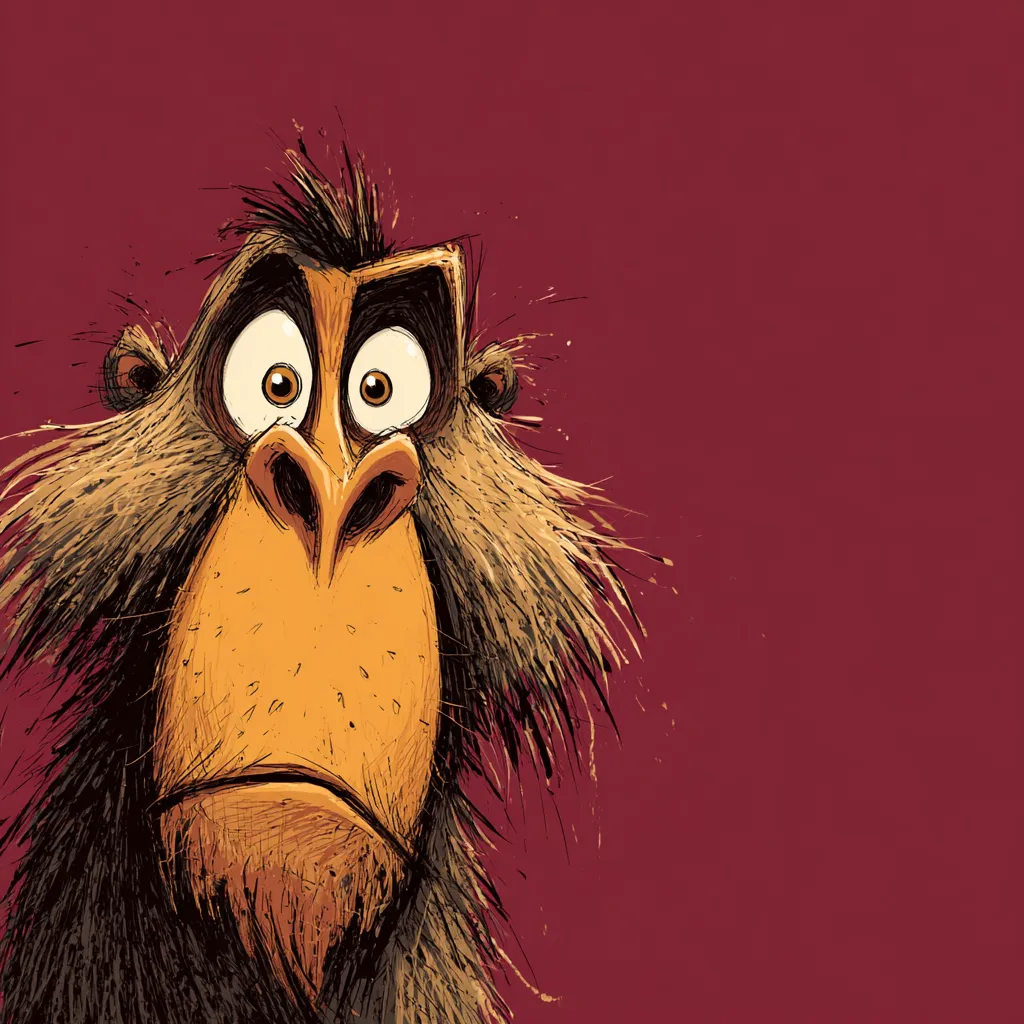
Well, it’s a playful metaphor. But a good one. Let’s have some fun with the science behind it.
Flying back after a workshop last week, I received an email.
“I know industries spent $98 billion on employee training last year. We’ve used a lot of those programs. So why can’t our departments stop fighting?” [1][2]
It was from an HR manager. Not unusual. But once in a while I find patterns.
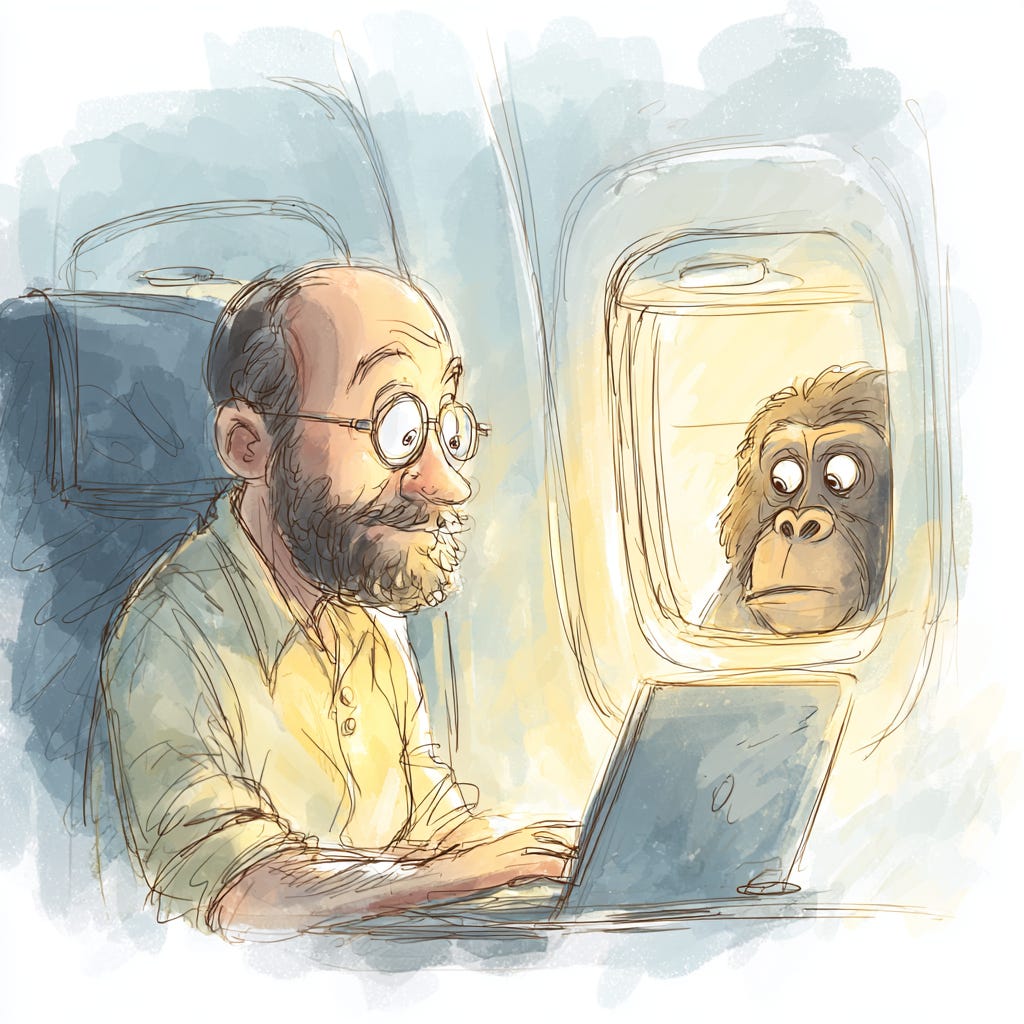
This email was a pattern.
I meet dozens of corporate managers every week in my workshops. Different industries. Same frustration. They try everything:
-
retreats
-
values training
-
“breaking silos” campaigns
-
leadership offsites
-
another consultant with another 4-box model
— So why do my meetings still feel like hostage negotiations?
I wasn’t sure. So, flying back I did what I love doing: research. I dug a little deeper. It got worse.
Here’s what else that $98 billion bought you:
-
60% of new managers fail within their first 24 months—despite all that training.[3]
-
85% of project failures are caused by lack of collaboration and inadequate communication.[4]
-
Poor management costs U.S. businesses between $960 billion and $1.2 trillion annually.[5]
-
Globally, the cost of poor management approaches $7 trillion—or 9-10% of the world’s GDP.[6]
— But my CEO knows this, right? They’re probably figuring out how to fix this.
Well, if they know.
More bad news. It goes invisible at the top.
A Harvard Business Review decade-long study of 100+ CEOs and senior executives found that: Leadership team dysfunction is “surprisingly common”—and often goes completely undetected by the CEOs themselves.[7]
I wasn’t surprised. Happens a LOT to my team in the field. A CEO tells us they think their leadership teams are “well-functioning.”
. . . but when we interview the managers, supervisors, team leaders, and executives separately, they expose a complete disaster.
THE TRAINING INDUSTRIAL COMPLEX THAT KEEPS NOT WORKING

Let’s be honest about what’s happening:
Organizations invest in all the expensive programs to facilitate “culture transformation,” behavioral profiling, teambuilding, tough conversations, 360 feedback sessions, and maybe a few trust falls.
And how’s that CULTURE INITIATIVE going?
If you’re an HR manager, how many times did you work with your CEO on “One Company” initiatives? How many “Breaking Down Silos” programs? How many values statements mention “collaboration” and “shared goals” and “communications”?
And yet:
· Sales and Operations can’t agree on priorities.
· Engineering and Product are locked in perpetual warfare over the roadmap.
· Finance is fighting everyone over budget allocation.
The pattern repeats.
And if you’re a manager or supervisor, it’s worse.
-
“I don’t control incentives.
-
I don’t control headcount.
-
I don’t control executive narratives.
But I’m still expected to ‘collaborate better’?

— Don, we’re not supposed to talk about that stuff out loud.
I know. But I see you (I feel your pain). The silos remain. The fighting continues. The dysfunction persists.
Here’s what I think is really going on:
· It’s not because your company picked the wrong consultant.
· It’s not because your executives lack commitment.
· It’s not even because your culture is broken.
There are a lot of things that could be causing the problem.
But I think the missing link is:
You’re trying to fix a biology problem with PowerPoint!
I think you’re fighting 200,000 years of primate evolutionary neuroscience with weekend retreats and values posters.
FROM BABOONS TO BOARDROOMS: WHY THIS KEEPS HAPPENING
In the 1970s, a British anthropologist named Robin Dunbar wasn’t dealing with office politics. He was sitting on a rocky outcrop watching gelada baboons on an Ethiopian plateau.
Baboon watching may not be high on your bucket-list, but he was trying to solve a puzzle that had nothing to do with you, or your organization’s dysfunctions.
Yet what he discovered explains exactly why your company fragments into warring tribes when you exceed 150 people:
· Why your departmental teams can’t stop fighting.
· Why silos form no matter how many culture initiatives you launch.
· Why you feel increasingly isolated the bigger your company gets.
· Why “collaboration” programs fail every single time.
And why $98 billion in training spending can’t fix it.
The answer started with baboons. Grooming each other.

— What? Baboon grooming explains my company’s problem? I don’t believe it! Show me the research.
Glad you asked.
Dunbar was trying to solve a puzzle: Why do primates spend so much damn time grooming each other?
Geladas spend up to 20% of their waking hours grooming. That’s insane from an evolutionary perspective. Every minute spent picking through someone else’s fur is a minute not spent finding food, watching for predators, or mating.
So why do it?
The prevailing theory was just hygiene—keep parasites down, prevent infection. Made sense. But Dunbar noticed something weird:
The bigger the group, the more time spent grooming.

Not just a little more. Proportionally more.
Groups of 50 geladas groomed way more than groups of 20. If it was just hygiene, group size shouldn’t matter—you’ve only got so much fur, right?
That’s when Dunbar had his insight:
Grooming wasn’t about hygiene.
It was about politics.
Primates groom each other to:
-
build alliances
-
maintain social bonds
-
signal tribal status
-
keep the tribe coherent
It was their way of having hallway chats, water-cooler meetups, pre-meeting coffees, after-work drinks, Slack DMs, casual after-meeting cliques.
The bigger the group, the more relationships you need to maintain, so the more time you spend grooming.
Then he asked the killer question:
If grooming time increases with group size, and there’s only so many hours in the day... is there a maximum group size that brain capacity can support?
THE NEOCORTEX EQUATION (if you’re a manager, this will scare you)
Dunbar spent the next decade comparing primate brain sizes to their stable social group sizes across 38 different primate species.
The finding: Neocortex size directly predicts maximum stable group size.
Not just correlates. Predicts!
— Wait! You mean you can measure a primate’s neocortex and calculate how large their social group is?
Yes—with scary accuracy!

The neocortex is the part of your brain responsible for social cognition — tracking alliances, remembering obligations, reading subtle intent. So how large did it predict primate social groups would be?
· Spider monkeys with smaller neocortices: groups of 15-25.
· Baboons with mid-sized neocortices: groups of 50-80.
· Chimpanzees: groups of 40-60.
The bigger the social brain, the bigger the stable tribe.
Then Dunbar did something brilliant and slightly unhinged.
He plugged human brain size into his primate regression equation.
The number that came out:
About 150. (some other studies suggest ranges from 100–250 depending on relationship depth )
According to primate neuroscience, humans should naturally organize into stable groups of around 150 people. That’s the cognitive limit of how many relationships your neocortex can actively maintain.
Dunbar thought: That’s a testable prediction.
— NO! He didn’t test it on us, did he?
YES, DUNBAR TESTED IT ON HUMANS
He spent weeks digging through ethnographic studies of hunter-gatherer societies—the closest living approximation to how humans organized themselves for 200,000 years before agriculture.
· The Bushmen of the Kalahari: clans of 148 people.
· Australian Aboriginal tribes: 100-150 people.
· Yanomami in the Amazon: villages split when they hit 150-200.
· Pacific Island communities: 130-180 people.
Across cultures, across continents, across history: ~150.
Not the immediate family band (15-50 people). Not the larger tribe (500-2,500 people). But that middle layer—the clan to affilate with—consistently hovered around 150.
This is the group size your brain was built for.
Modern studies confirmed it:
-
Average Christmas card list: 153 people
-
Typical Facebook friends with actual interaction: 150
-
Gore-Tex company policy: max 150 employees per building (discovered through trial and error before Dunbar published)
-
Hutterite farming communities: split at 150
-
Roman army company size: 120-150
Your neocortex can track about 150 relationships.
After that, the system breaks down!
OMG, THIS EXPLAINS YOUR LEADERSHIP NIGHTMARE
Your company has 300 people. Or 800. Or 3,000.
Your brain was designed for around 150.
The problem isn’t that training doesn’t work.
The problem is training operates at the individual level.
Dunbar operates at the relational density level!
— But what if baboon troops get too large, and individuals can’t maintain grooming relationships with everyone?
Well here’s what Dunbar’s rsearch revealed. When baboon groups exceed their brain’s processing capacity, they do what humans do:
They split into factions.
They fragment into smaller teams.
— And what do those factions do?
Compete for resources. Form alliances against each other. Fight for status and access to the alpha. Optimize for tribal victory instead of collective success
Sound familiar?
Sales vs. Operations. Engineering vs. Product. Corporate vs. Field. East Coast office vs. West Coast office. The “old guard” vs. “new hires.”
Your company isn’t exempt from evolutionary biology.
[Wait, you mean my company is a set of tribes pretending to be one, competing for attention and resources?]
What do you think?
· Your Sales tribe celebrates when they “beat” their revenue target—even if it screwed over Operations who now can’t deliver.
· Your Engineering tribe celebrates when they “protected” the architecture from Product’s “stupid ideas”—even though it delayed the launch by six months.
· Your Finance tribe celebrates when they “held the line” on budget—even though it starved Innovation of the resources they needed.
Each tribe is winning.
Your company is losing.
And you’re in the middle, trying to get everybody to collaborate.
Still wondering why some of your meetings feel like hostage negotiations?
Because they are.
And If you’re in HR, you’re being asked to fix biology with engagement surveys when your real issue is competing tribal chiefs. Each optimizing for their tribe. None able to maintain enough relationships across the company to actually care about the other tribes’ success.
THE NIGHTMARES CAUSED BY EXCEEDING 150 LIMIT
Let me get brutally specific about how this sabotages your leadership.
Most large-company dysfunction collapses into predictable patterns:
· Nightmare #1: Resource Warfare
Budget, headcount, and executive attention become survival signals.
· Nightmare #2: Information Collapse
Information flows within tribes and degrades across boundaries — not from malice, but weak social ties.
· Nightmare #3: Isolation at the Top
Leaders exceed their own relational capacity and start managing through reports instead of reality.
Hierarchy replaces trust.
THIS IS WHY YOUR COMPANY FRAGMENTS
You thought this was organizational dysfunction. Politics. Bad culture. Weak leadership.
And you’ve been fighting this with culture initiatives, values posters, team-building exercises, and consultants who don’t understand primate neuroscience.
The fragmentation you’re seeing isn’t a culture problem. It’s a biology problem. Primate neuroscience. Just like baboons who exceed their stable troop size must rely on dominance hierarchies instead of grooming relationships, your employees’ brains do exactly the same thing.
You can’t fix biology with PowerPoint!
The baboons stole your brain. And they’re running your company into the ground.
You’re fighting evolution . . . And evolution is undefeated.
— Are we stuck with this?
No. Relax. This is biological pressure, but not biological destiny.
Militaries, religions, and some large firms do scale successfully.
Nature is smarter than most org charts. But it can be outmaneuvered.
How? Stop with the posters and speeches. Large organizations cannot feel like one team — so they must be architected, not just inspired.
What to Do
1) Change the question.
It isn’t:
“How do we get everyone to act like one team?”
It’s:
“How do we design an organization that works with human social limits instead of pretending they don’t exist?”
[Does that mean humans can’t organize beyond 150 people?]
No. They can. If architected for it.
And this is where most articles — including my earlier drafts — get sloppy.
2) Map team boundaries and identify cross-team conflicts.
Dunbar’s number is not a hard stop. It’s a soft cognitive constraint.
Which means:
• It’s pressure, not destiny
• It creates instability, not impossibility
• It can be worked around — but only with deliberate architecture
Anthropology proves this.
Humans have always scaled in history through:
• layered identities
• role-based affiliation
• rituals, symbols, stories, and shared meaning
• formal structures that replace personal bonding
This is how those armies, religions, and nations have done it … they’re all workarounds.
But — and this is the part managers miss — those workarounds don’t happen accidentally.
We’ve just forgotten the ancient art, and how to teach it in our leadership training programs!
If you’re a paid subscriber, implementation ideas on this will be in your email soon!
3) Stop saying “one team” in your next meeting — and watch the reaction.
Quit doubling down on togetherness.
· “One team.”
· “One company.”
· “One culture.”
You see, here’s the uncomfortable truth:
Large organizations don’t scale by eliminating the tribes.
They scale by orchestrating them.
Remember
If you’re still trying to create harmony at scale, you’re not behind.
You’re just late to the oldest truth.
High-performing organizations don’t eliminate tribal behavior . . .
-
They exploit it.
-
They design conditions where tribes can only win by helping other tribes win.
-
They replace emotional unity with structural coherence.
. . . And yes — that requires letting go of some very comforting myths.
Which is why most organizations don’t do it. They just keep fighting biology with PowerPoint.
And then act surprised when the baboons keep winning.
Call to Action
1) Share this with friends and colleagues.
If this resonated, your collegues need to hear it too. Help me spread the word.
2) Are You Responsible for Execution?
You just read this Management-Edge memo.
Free subscribers get this insight.
Paid subscribers get the implementation advantage.
If you’re managing the middle — between executive pressure and frontline reality — Paid gives you:
-
Step-by-step guidance to apply this inside your organization
-
CEO-level thinking for sharper strategic judgment
-
Political courage frameworks for navigating bureaucracy
-
Scripts for high-stakes conversations
-
Private, off-the-record roundtables with Don
Insight changes how you think.
Implementation changes what happens.
If you’re responsible for outcomes — not just ideas — this is where the real work begins.
Upgrade to Paid → Get the Implementation Brief.
3) Are you an executive, and implementation requires more?
My speeches and retreats help fund next rounds of R&D. After 2,000+ engagements and industry awards, 100+ executive teams annually use this blend of MIT/Johns Hopkins research, tribal fieldwork, and evolutionary genetics to solve very real problems.
“This is the first event where people actually changed their thinking—and did something.”
To explore if this fits, email me: [email protected] or hit the button below.
We’re not for everybody, but we’ll have a real conversation—no pitch, we are limited in how many clients we take on, just honest assessment of whether we can solve your specific problem.
P.S. Your engagement funds the next research expedition. Let’s make it count.
Thanks for joining this quiet rebellion against status-quo leadership.
Stay dangerous.
— Don
SOURCES:
[1] High5 Test. (2025). “Employee Training Statistics & Data in the U.S. (2024/2025).” Retrieved from https://high5test.com/employee-training-statistics/ (Data from Training Magazine’s 2024 Training Industry Report showing U.S. corporate training spending fell from $101.8B in 2023 to $98B in 2024)
[2] ELM Learning. (2025). “How Much Does Employee Training Really Cost?” Retrieved from https://elmlearning.com/blog/how-much-does-employee-training-really-cost/ (Citing survey data showing 23% of companies plan to increase spending on interpersonal skills including communication and teamwork)
[3] Wharton Executive Education. (2024). “Managing to Fail? Why New Leaders Need Training.” Retrieved from https://executiveeducation.wharton.upenn.edu/thought-leadership/wharton-at-work/2024/09/new-leaders-need-training/ (Citing Gartner research confirming 60% of new managers fail within first 24 months)
[4] Teamland. (2025). “Team Building Statistics Every Manager Should Know.” Retrieved from https://www.teamland.com/post/team-building-statistics (Citing survey data showing 85% of respondents believe primary cause of project failures is absence of collaboration and inadequate communication)
[5, 6] Wharton Executive Education. (2024). “Managing to Fail? Why New Leaders Need Training.” (Gallup estimates cost of poor management in U.S. at $960B-$1.2T per year; globally approaching $7 trillion or 9-10% of world’s GDP)
[7] Keil, T. & Zangrillo, M. (2024). “Why Leadership Teams Fail.” Harvard Business Review, September-October 2024. Retrieved from https://hbr.org/2024/09/why-leadership-teams-fail (Based on interviews with 100+ CEOs and senior executives in multi-year research program)
[8, 9] Klein, C., DiazGranados, D., Salas, E., Le, H., Burke, C.S., Lyons, R., & Goodwin, G.F. (2009). “Does Team Building Work?” Small Group Research, 40(2), 181-222. (Meta-analysis finding nonsignificant tendency for team building to result in lower performance when measured objectively, and that effects of team building decreased as team size increased)
[10] Dunbar, R.I.M. (1992). “Neocortex size as a constraint on group size in primates.” Journal of Human Evolution, 22(6), 469-493.
[11] Dunbar, R.I.M. (1998). “The social brain hypothesis.” Evolutionary Anthropology, 6(5), 178-190.
[12] Dunbar, R.I.M. (2009). “The social brain hypothesis and its implications for social evolution.” Annals of Human Biology, 36(5), 562-572.

Responses