
Welcome back to the META-Strategy™ field lab.
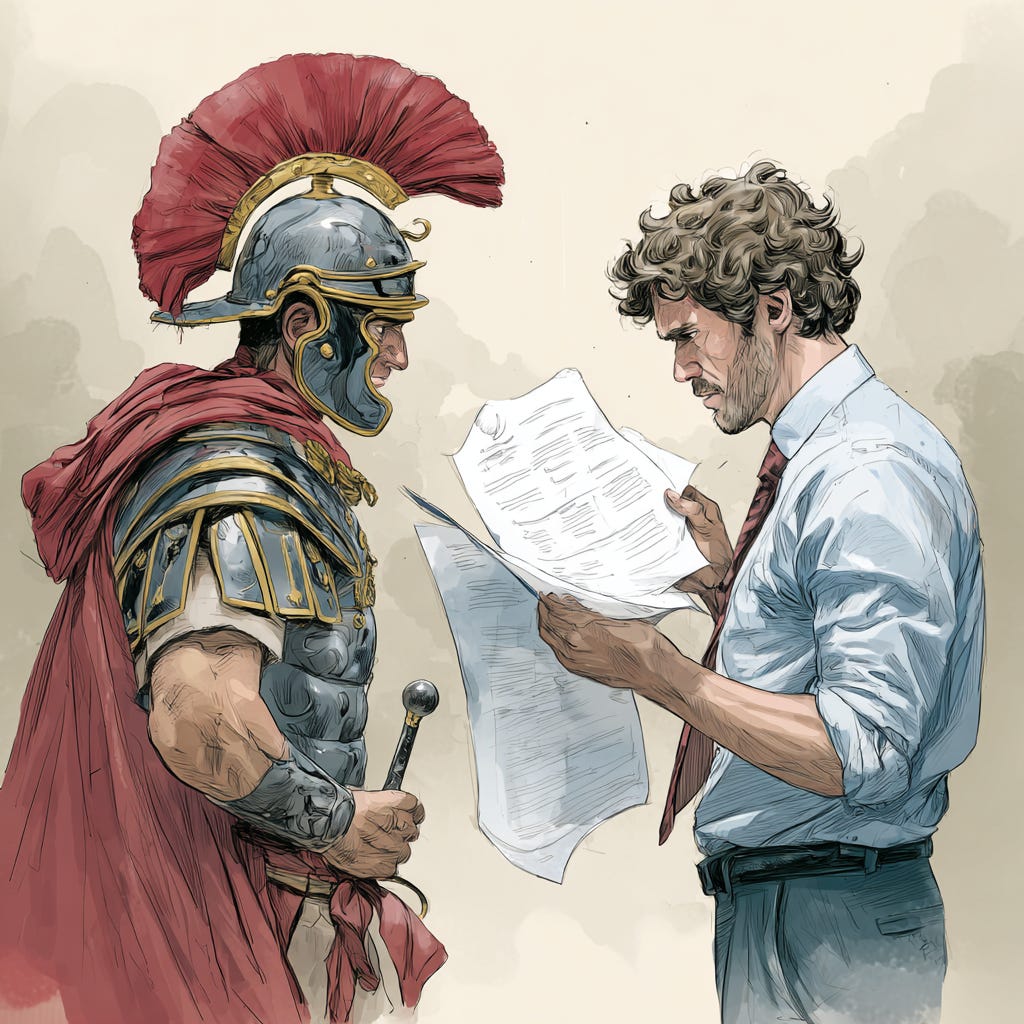
While most companies just develop a “TACTICAL-Strategy” — those fill-in-the-blank strategic planning templates with a 70+% failure rate — we study what else is needed to actually win. And it’s rarely what MBAs expect.
Don’t go into battle with a template when you need a sword.
Use this META-Strategy post-series to create a winning formula to drive those tactics to success.
Today, two ancient generals, Hannibal and Alexander, teach you how to win by using weakness as your greatest weapon—and reveal the modern business playbooks doing the same.
Enjoy.
Hannibal at Cannae (216 BC)
Weaponize your weakness.
This is a masterpiece. Hannibal faced Rome’s favorite move: overwhelming frontal assault with numerically superior heavy infantry. Rome had roughly 86,000 soldiers. Hannibal had maybe 50,000. The Romans were confident they’d just crush him through raw power.
Perfect setup—for the slaughter Hannibal wanted.
Hannibal played the reverse card. He deliberately arranged his infantry in a convex formation—bulging forward toward the Romans. He put his weakest troops (Gauls) in the center and his strongest (African veterans) on the flanks, but held back.
When Rome attacked, the center gave way gradually, bending backward like a bow. The Romans, sensing victory, pushed harder, packing tighter together as they funneled into what was becoming a concave pocket. That’s when Hannibal’s cavalry, having routed the Roman cavalry on both wings, swept around to the Roman rear.
Then the African infantry on the flanks wheeled inward. That’s when Hannibal’s trap snapped shut: The Romans were now completely surrounded—front, flanks, and rear.
Compressed so tightly they couldn’t even swing their swords effectively.
The result: between 50,000-70,000 Romans died in a single afternoon.
. . . Hannibal’s losses? Maybe 6,000.
It remains the most lethal day of battle in Roman history.
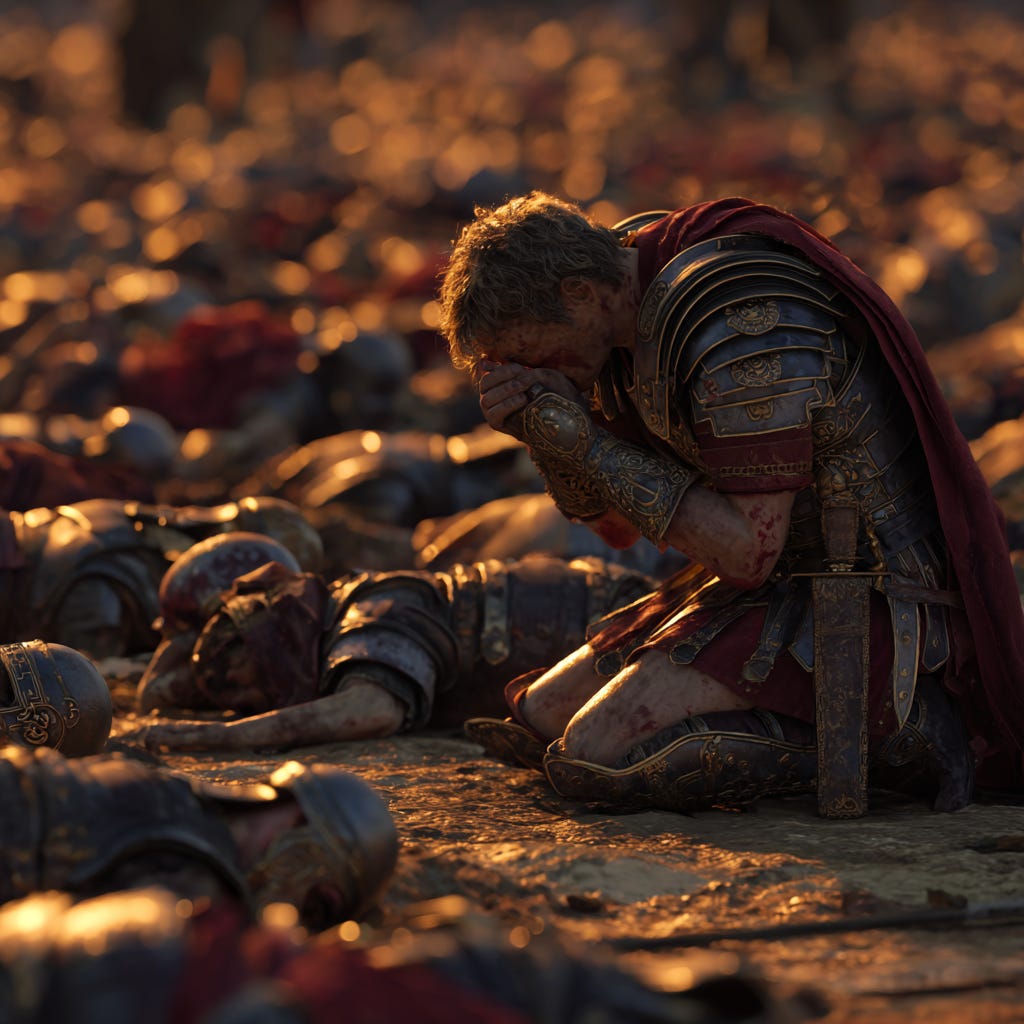
Added detail: The Roman defeat was so catastrophic that “Cannae” became synonymous with total annihilation. Modern military academies still study this double envelopment as the perfect tactical battle.
META-Strategy Lesson: Want to win? Turn your opponent’s ego into a snare and let them walk right in.
Modern Matches:
-
Southwest Airlines - Deliberately appeared to be a limited regional carrier with “inferior” service (no meals, no assigned seats) while building operational superiority that trapped legacy carriers. Their “weaknesses” were actually core advantages. While majors worshiped hub-and-spoke complexity and fleet variety, Southwest went point-to-point, one aircraft type, and secondary airports; simplicity as an asymmetric weapon.
-
Dollar Shave Club - Pierced Gillette’s brand armor with viral irreverence and a distribution flip. Inertia met mockery.
But META-Strategy isn’t just about turning weakness into strength. It’s also about turning your enemy’s strength into a trap . . . Enter Alexander.
Alexander at Gaugamela (331 BC)
Turn the expected into bait.
Alexander the Great faced Darius III of Persia on a battlefield Darius had literally custom-designed for victory—flat, wide-open terrain perfect for his chariots and massive numerical advantage (possibly 2:1 or more).
Darius knew Alexander’s forces were smaller and at a disadvantage.
The night before battle, Alexander pulled a classic fake-out: he made a big show of preparing for a night attack, complete with troops moving around and noise.
Persian scouts saw this, reported back, and Darius kept his entire army awake all night in formation expecting an assault that never came.
Meanwhile, Alexander’s troops slept like babies.
The next day, Alexander employed his signature tactic: he attacked at an angle, moving his elite Companion Cavalry to the right, stretching Darius’s line thin. Then—and here’s the genius part—he deliberately left a gap in his center that looked like vulnerability. Darius, seeing an opening to kill Alexander directly, sent his best troops charging through.
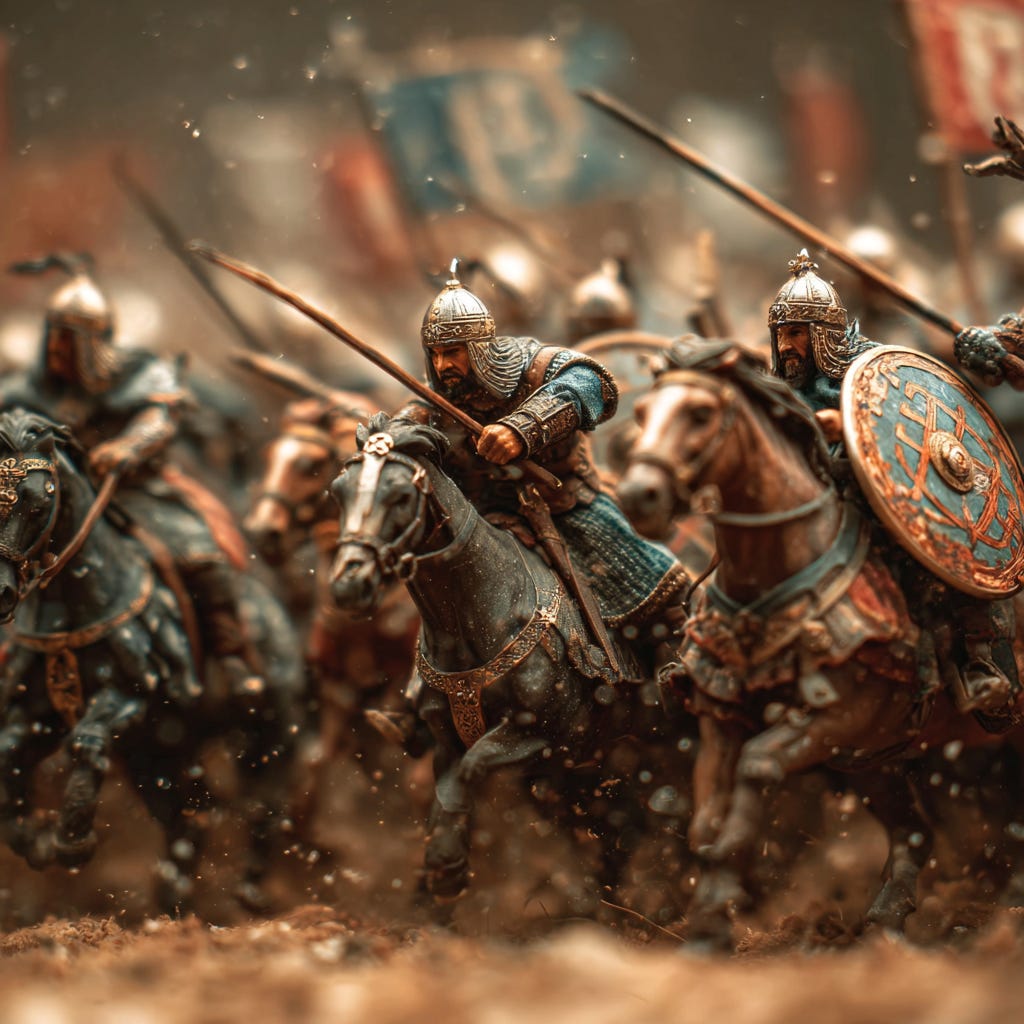
That’s when Alexander wheeled his cavalry and slammed into Darius’s now-exposed left flank and rear guard like a freight train through a paper wall. Darius panicked, fled, and his army collapsed. Checkmate.
Added detail: This battle happened on October 1, 331 BC, near modern-day Mosul, Iraq. It effectively ended the Persian Empire and made Alexander master of the known world at age 25. Overachiever.
META-Strategy Lesson: Sometimes success means letting the other guy feel smart—until the trapdoor opens. Appear small and beatable—until it’s too late for the big guys to pivot.
-
Modern Match: Slack vs. Enterprise Comms Giants
Slack entered a market dominated by heavyweights like Microsoft and Cisco. Rather than build a “full-featured” suite, it played “lightweight, playful, and easy-to-use.” Critics called it shallow. The big guys knew they were bigger, and owned the field. Users called it a godsend and Slack outmaneuvered the big guys. Eventually, even Microsoft had to mimic it. -
IKEA - “Make customers do the work.” Who would foolishly create a business model that inconvenienced customers to build their own furniture? What looked like a weakness became an impenetrable moat. Other retail chains could only stare in disbelief.
The ancients knew what today’s executives often forget: strength isn’t what always wins. Surprise does. And it can start by looking weak—on purpose.
Ready to explore how META-Strategy™ can weaponize your weaknesses? Let’s keep going.
Call to Action
1) Forward this to friends and colleagues.
Let them join you in the revolution against the status quo.
2) Comment on your experience of this topic.
It helps our community a lot.
3) Go further (your competitors are reading this too).
The difference? They’ll keep running initiatives that change nothing. Keep complaining teams “lack urgency.” Keep creating plans that die in execution.
Or they’ll do what 75 executive teams do annually: Bring me in to show why their management theories fail—and what actually works.
Here’s what I don’t do: Workshops on “alignment”, motivational speeches, or ideas that sounds brilliant in the boardroom but die in implementation.
Here’s what happens instead: Your team learns the research from MIT, Johns Hopkins, and decades of fieldwork explaining why initiatives failed. Then we fix it.
“It’s the first event we’ve ever had where people actually implemented something.”
Whether a keynote, retreat, or offsite—the goal is the same:
-
Move the needle.
-
Make it unforgettable.
-
Create an experience where they actually do something differently afterward.
Press kit & inquiries: [email protected]
P.S.: My calendar is 60% booked through year end. Let’s talk. Your funding supports our research.

Responses