

The "boiled frog" laboratory experiment helps educate people on how slow, incremental changes may not be noticed until it’s too late. In the experiment, if you put a frog in a pot of boiling water, it will jump right out. But if you put it in cool water that you slowly heat up, the frog remains unaware of its deadly changing environment and eventually boils to death.
I thought this was wise advice and even used it myself with audiences, often. Then, one day, I realized I was making a really big mistake. A minor detail was missing in the research:
No one has boiled a frog . . . unless they’re a chef.
AUTOPSY (let's perform a dissection)
In business meetings or conferences, you've probably heard speakers use the boiled frog example to describe how the performance of cultures, organizations, or entire societies can slowly decline over time without anyone really noticing.
It's referenced in tens of thousands of books and articles such as Manfred Kets de Vries book, “Life and Death in the Executive Fast Lane.”
“Take a pot of hot water and a frog. Throw the frog into the pot. What do you think will happen? The obvious, of course: the frog will jump out. Who likes hanging around in a pot of hot water? Now … take a pot of cold water, put the frog in it, and place the pot on the stove. Turn on the heat. This time something different will occur. The frog, because of the incremental change in temperature, will not notice that it is slowly being boiled. Unfortunately, many organizations, as they grow, begin to resemble the boiled frog.”
Even Al Gore used a version of the story in a New York Times op-ed article[15] and mentions it in his speeches. He also noted it in his 2006 movie An Inconvenient Truth to describe ignorance about global warming (in the movie version the frog is rescued before it is harmed).[16]
The boiled frog story is even now a standard idiom in industry.[see here]
But frogs don’t listen to consultants, or read best-selling management books
BUSTED (what really happened)
As usual, I jumped into the research and tracked down some people more brilliant than me (which is easy to do 😲😳). Apparently, the "boiled frog" leaped over the scientific lillypads.

According to many researchers who ventured into this experiment for over a century, the science behind it has produced the opposite findings.
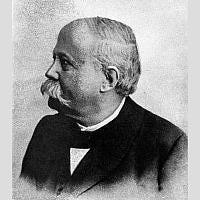
Experiments dating back to the 19th century, notably by German physiologist Friedrich Goltz, concluded that a frog would not stay in gradually heated water but instead would attempt to escape as the temperature of the water approaches its body temperature.

Later, in 2002, Dr. Victor H. Hutchison, a herpetologist and professor emeritus of zoology at the University of Oklahoma, extensively researched the subject and debunked the myth once more. According to his findings, "The legend is entirely incorrect! The 'critical thermal maxima' of many species of frogs have been determined by several investigators. In this procedure, the water in which a frog is submerged is heated gradually at about 2 degrees Fahrenheit per minute. As the temperature of the water is gradually increased, the frog will eventually become more and more active in attempts to escape the heated water."
Well, Don, but these studies are all buried in the scientific literature. How would we know about them as a manager?
Good point! But you can't hop there yet. The most amazing exposure was in a business magazine!
In the Oct 95 “Fast Company” issue, they met with national scientific authorities such as Dr. George R. Zug, curator of reptiles and amphibians, the National Museum of Natural History. They documented his response as:
“Well that’s, may I say, bullshit. If a frog had a means of getting out, it certainly would get out. And I cannot imagine that anything dropped in boiling water would not be scalded and die from the injuries.”
They then met Professor Doug Melton, Harvard University Biology Department, who said,
“If you put a frog in boiling water, it won’t jump out. It will die. If you put it in cold water, it will jump before it gets hot — they don’t sit still for you.”
I was even more impressed that they used their own Testing Laboratory to conduct an empirical test. The participants included :
-
Debra Hofman, research associate at MIT’s Center for Information Systems Research and coauthor of “Implementing Radical Change: Gradual Versus Rapid Pace.”
-
Thomas Hout, vice president of the Boston Consulting Group and coauthor of “Competing Against Time”.
(I'm really fortunate that his co-author, George Stalk, is willing to spend time with me on researching some some cool projects for you. Stay tuned!).
Their findings?
-
They placed Frog A into a pot of cold water and applied moderate heat. At 4.20 seconds, it safely exited the pot with a leap of 24 centimeters.
-
Then Frog B was put into a pot of lukewarm water and applied moderate heat. At 1.57 seconds, it safely exited the pot with a leap of 57 centimeters.
Sadly, both historical and contemporary research has disproven the 'boiled frog' experiment.
But I know what you're thinking:
If it’s been disproven so many times for so long, why are consultants and speakers still using it?
Probably because the rate of change has been so slow they didn’t notice it!
Wait. What?
WHAT TO DO
I'm going to start using this concept as a metaphor, not science. If you find yourself using it “authoritatively”, then you may have become infected with Charlatitis (for a definition, see my previous blog post on The Butterfly Effect), and people will eventually find you out.
If you hear someone else using this as science, then gently correct them after the meeting. Unless it’s your boss who’s easily offended, in which case just shut up (and question your career choices).
But if you want to use a critter as scientific proof in discussions related to the danger of slow, incremental change in topics such as climate change (for or against), organizational change, company culture, social policy, or political agendas, don't use a frog. Use a different animal that has more supportive evidence for ignoring facts and data . . . like, um, humans.
Overall, put the "boiled frog" in the metaphor box with the others like:
-
“He’s between a rock and a hard place.”
-
“Or he’s taking a long walk off a short pier.”
-
“He’s full of hot air.”
-
“She's in deep water."
-
"He's skating on thin ice."
-
"She's barking up the wrong tree."
-
"He's a fish out of water."
-
"She's burning the candle at both ends."
-
"He's a wolf in sheep's clothing."
-
"She's walking on eggshells
-
"He's shooting himself in the foot."
Or, better yet, just find a good frog leg recipe.

Call to Action
1) Forward this to friends and colleagues.
Let them join you in the revolution against the status quo.
2) Comment on your experience of this topic.
It helps our community a lot.
3) Go further (your competitors are reading this too).
The difference? They’ll keep running initiatives that change nothing. Keep complaining teams “lack urgency.” Keep creating plans that die in execution.
Or they’ll do what 75 executive teams do annually: Bring me in to show why their management theories fail—and what actually works.
Here’s what I don’t do: Workshops on “alignment”, motivational speeches, or ideas that sounds brilliant in the boardroom but die in implementation.
Here’s what happens instead: Your team learns the research from MIT, Johns Hopkins, and decades of fieldwork explaining why initiatives failed. Then we fix it.
“It’s the first event we’ve ever had where people actually implemented something.”
Whether a keynote, retreat, or offsite—the goal is the same:
-
Move the needle.
-
Make it unforgettable.
-
Create an experience where they actually do something differently afterward.
Press kit & inquiries: [email protected]
P.S.: My calendar is 60% booked through year end. Let’s talk. Your funding supports our research.

Responses