
Advice learned from speaking to 50+ CEO groups annually
By Don Schmincke
Many CEOs are starting to plan for next year.
Why is that a problem?
They've got previous strategic plans to refer to, operating systems, dashboards, accountability processes, consultants, books, coaches, and enough software to run a small country.
Yet the same complaints keep coming up.
- We aren't executing fast enough.
- My people aren't focused.
- We're too tactical.
- I can't get out of the weeds.
- We know what we need to do, but somehow it doesn't get done.
Decades of study since I started the project at Johns Hopkins confirm that strategic execution failures like this aren’t new.
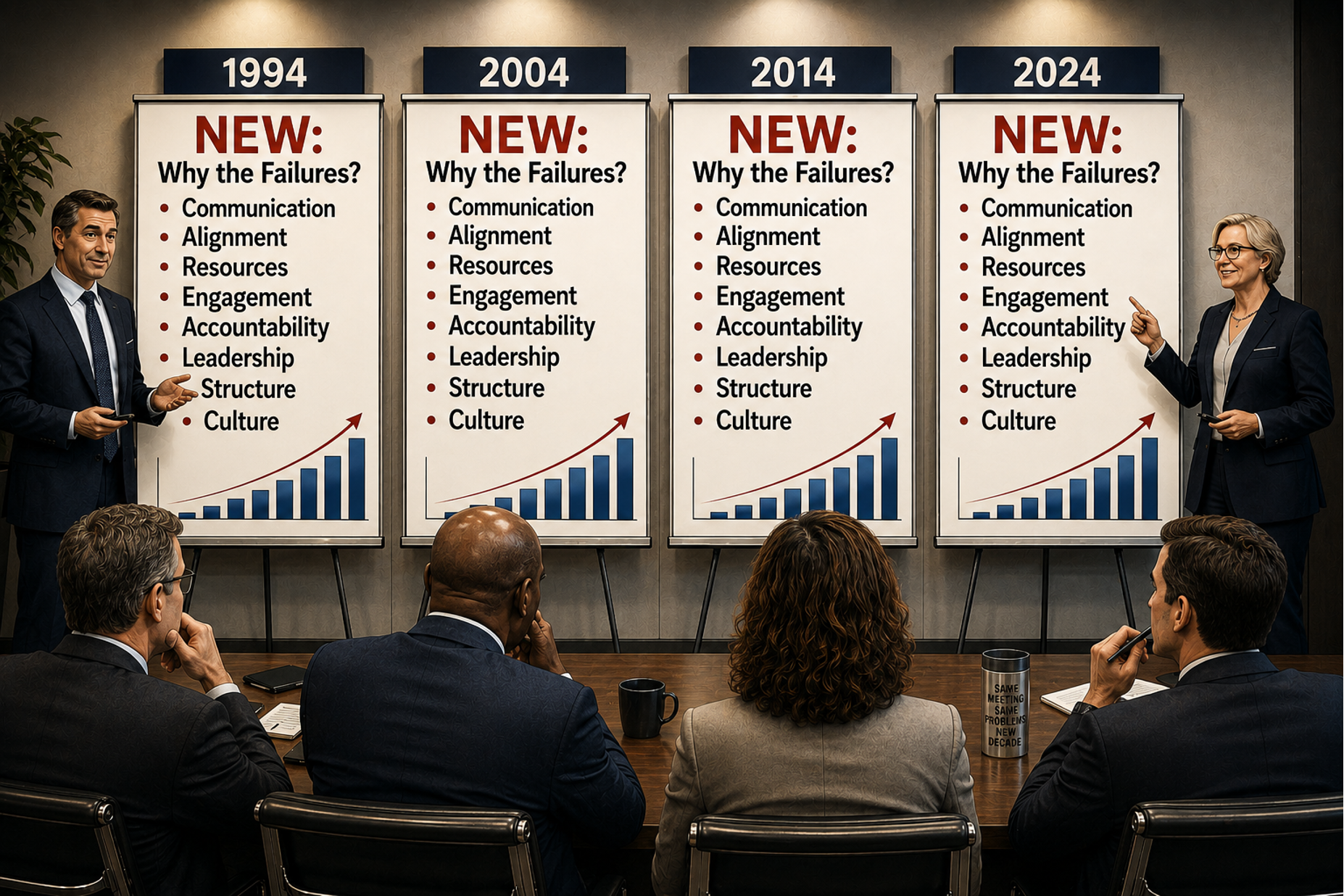
Every 10 years a new paper is published on what causes strategic execution failures.
And it's the same paper!!!!
This changed the direction of my research. Instead of asking why organizations fail to execute, I started asking a different question: Where does the energy to execute actually come from?
That led into biology and eventually to what I'm calling The Metabolic Organization™.
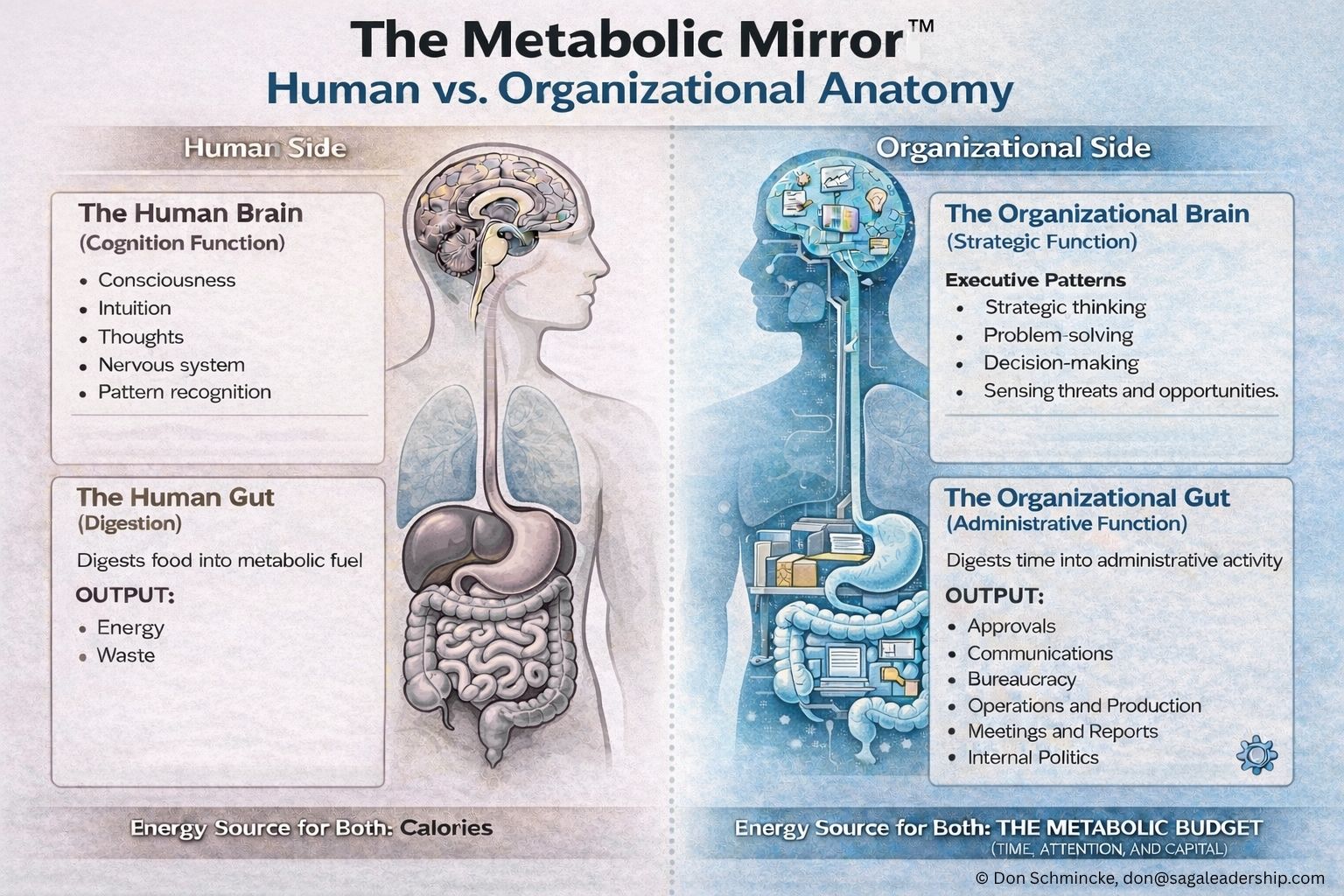
Our bodies digest food for energy.
Our organizations digest time for activity.
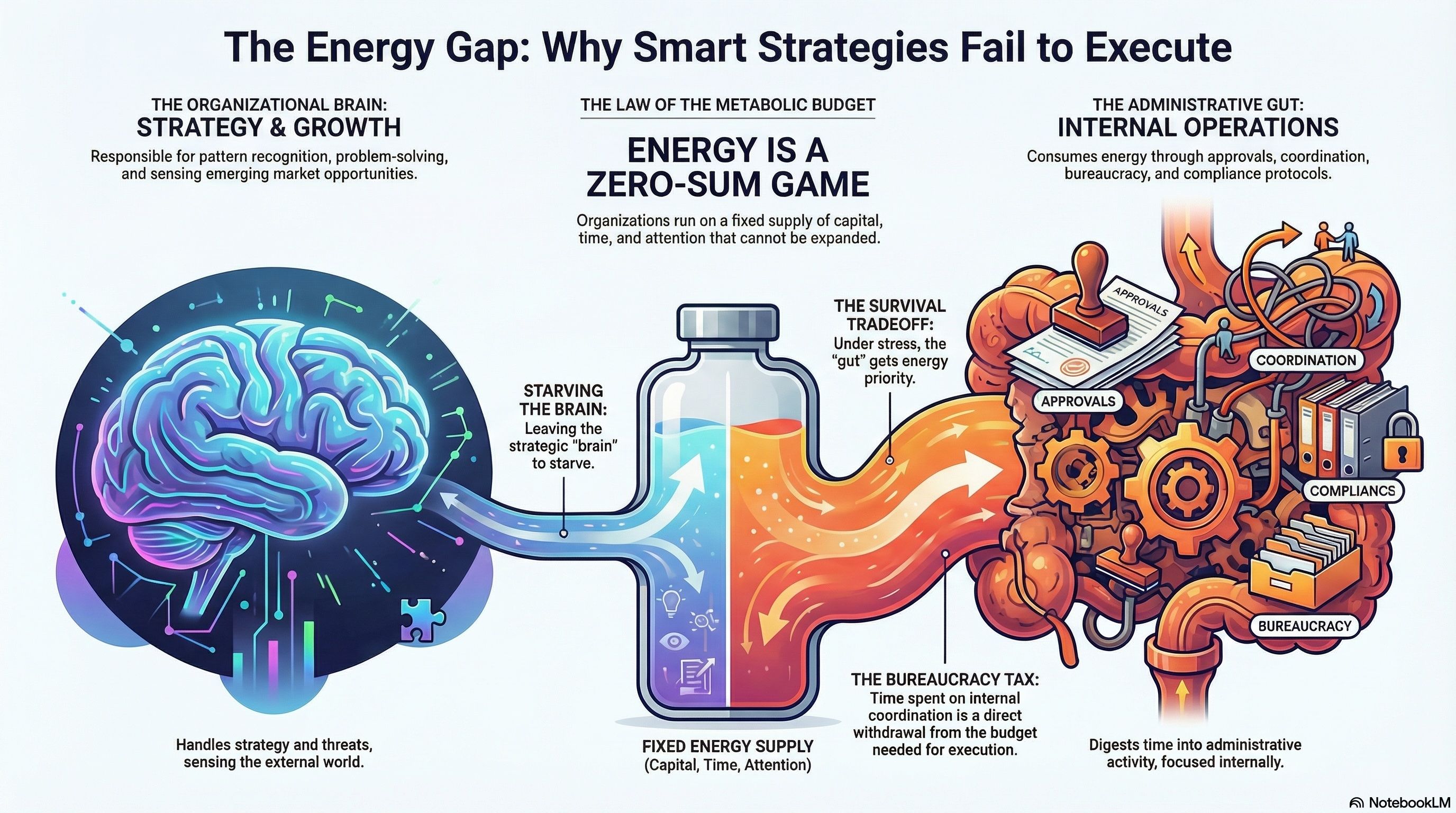
Body energy gets allocated mostly to the brain and the gut, and everything else required to keep you alive. Likewise, org time gets allocated to the strategic “brain” or the administrative “gut”.
Once I started looking at organizations this way, it became difficult to unsee it.
How much time gets digested for strategic thought or administration?
Think about it.
- Every meeting consumes time.
- Every report consumes time.
- Every email eats time.
Every approval, email chain, forecast, status update, compliance requirement, customer escalation and internal process gets fed from the same finite supply of time.
None of these things are necessarily bad. Your digestive system isn't bad. You need it. The problem begins when so much energy goes toward keeping the organism's gut functioning that there isn't enough left for the brain.
What gets starved is the strategic work for strategic adaptation, testing an opportunity, redesigning an offering, reallocating resources, or implementing a consequential change.
And that describes many organizations.
This explains why CEOs develop a strategy, identify the priorities, communicate them to the organization and then return Monday morning to a company that has an enormous appetite for admin.
Administration eats first.
Strategic work gets interrupted because:
- The quarterly report is due.
- Someone needs a number.
- A customer is upset.
- A manager needs approval.
- Finance needs another forecast.
- HR needs a form completed.
By Tuesday afternoon, the CEO who has three strategic priorities is approving something that shouldn't have reached them in the first place.
Then six months later we decide the execution problem must be accountability, so we introduce another dashboard, another report and another meeting to make sure everyone is following the strategy.
We introduce processes to improve execution but they consume the capacity required to execute.
Notice what just happened.
We try to cure organizational energy problems by creating another gut-level admin process to consume organizational time with none left over for the strategic brain.
And we wonder why we're frustrated with execution?
This changes how I look at strategic execution. Sometimes the problem isn't that people don't care about the strategy, disagree with it, lack accountability or need to be motivated. Sometimes the strategy is simply being starved by the machinery required to operate the existing business.
What to do? Try Something with your team or CEO group
- Ask your team members to do a simple energy autopsy. Have them estimate where their leadership team's attention went during the previous week: operating the current business, handling administration and reporting, fixing problems, and building the future. The numbers don't have to be precise. In fact, debating whether something was 17 percent or 21 percent misses the point. You're looking for the pattern.
- Then ask each executive to identify one recurring activity that consumes significant management time but probably would not exist if the company were designed from scratch today. It might be a meeting created for a problem that disappeared five years ago, an approval added after one expensive mistake, or a report nobody has had the courage to kill.
- Finally, ask the uncomfortable question: If your current allocation of attention continues for another three years, what important strategic issue is most likely to starve?
The answers are usually more useful than another conversation about time management.
I'm beginning to suspect that some of our most stubborn execution problems aren't caused by a shortage of management tools at all.
We may simply be feeding the wrong things.
If I'm scheduled to see your groups or executive teams this coming year, let’s continue evolving this.
If you’re one of the 50 groups I spoke to this year, thanks for helping me test this new research. Sometimes you confirmed the findings. Sometimes you found holes in it. Both were valuable.
Join Us!
We hate SPAM. We will never sell your information, for any reason. Unsubscribe anytime.
